Landline Phone:
(413) 214-6541
Location:
15 Agawam Ave West Springfield, MA 01089
Mon - Fri:
8.00am - 4.00pm
Industrial Water Analysis: The Foundation of Operational Integrity
Related Posts
In the modern industrial landscape, water is far more than a simple utility—it is a sophisticated chemical medium that acts as a heat transfer fluid, a solvent, and a byproduct of complex manufacturing processes. Whether it is the ultra-pure water required for semiconductor fabrication or the high-pressure steam driving a utility-scale turbine, the chemistry of your water dictates your operational costs, your regulatory risk, and the ultimate lifespan of your multi-million dollar assets.
Sterling Analytical provides comprehensive Industrial Water Analysis designed to meet the rigorous demands of Environmental Health and Safety (EHS) managers, plant engineers, and water treatment professionals. Our laboratory utilizes state-of-the-art instrumentation to provide the NIST-traceable data required for both regulatory compliance and advanced engineering optimization.
The "Water-Energy Nexus": Why Testing Matters
The relationship between water chemistry and energy efficiency is absolute. In industrial systems, water is the primary vehicle for moving heat. When that water is improperly managed, the “Water-Energy Nexus” breaks down, leading to massive financial losses.
1. The Economic Cost of Scale
Mineral scaling—primarily from Calcium Carbonate, Silica, and Magnesium—acts as a powerful thermal insulator.
The Efficiency Gap: In a Boiler System, just 1/16th of an inch of scale can increase fuel consumption by up to 15%.
The Chiller Impact: In Cooling Towers, scale on heat exchanger tubes forces compressors to work significantly harder to achieve the same cooling tonnage, leading to skyrocketing electricity bills and premature mechanical failure.
2. Asset Protection and Corrosion Control
Water is the “Universal Solvent,” and in an industrial environment, it is constantly attempting to return refined metals to their natural oxide state (rust).
Pitting Corrosion: Unlike general thinning, pitting is a localized attack that can “drill” through a stainless steel pipe or pressure vessel in weeks.
Indicator Metals: Sterling Analytical utilizes Heavy Metals Testing (ICP-OES) to monitor for “indicator metals” like Iron, Copper, and Zinc. A spike in these metals is the “early warning system” that your corrosion inhibitors have failed.
Our Core Industrial Testing Verticals
Sterling Analytical provides a “Full-Loop” approach to water management, covering every stage of the industrial water cycle:
Boiler Water Testing & Steam Chemistry
High-pressure steam systems are the most volatile environments in any plant. We provide the rigorous analysis required to prevent caustic embrittlement, oxygen pitting, and foaming. Our testing includes alkalinity profiling (P & M Alkalinity), sulfite/hydrazine residuals, and phosphate monitoring to ensure your pressure vessels remain safe and efficient.
Cooling Tower Water Testing & Analysis
Open-recirculating cooling systems are prone to the “Triple Threat” of scale, corrosion, and biofouling. We calculate the Langelier Saturation Index (LSI) and provide specialized Legionella Culture Testing to ensure your facility meets ASHRAE Standard 188 and protects public health.
Storm Water Testing & Compliance
Discharging water is a major legal liability. We help facilities manage their National Pollutant Discharge Elimination System (NPDES) requirements. From “First Flush” sampling for Total Suspended Solids (TSS) to monitoring for Oil & Grease and heavy metals, we ensure your data is defensible during a regulatory audit.
Feedwater Chemistry Analysis
The “Gatekeeper” of your system. We validate the performance of your pre-treatment equipment, including water softeners, Reverse Osmosis (RO) units, and deaerators. If the feedwater is off, the downstream system is guaranteed to fail.
Advanced Analytical Capabilities & Instrumentation
Sterling Analytical goes beyond basic “wet chemistry” field kits. We utilize high-resolution laboratory instrumentation to identify trace contaminants that can disrupt industrial processes:
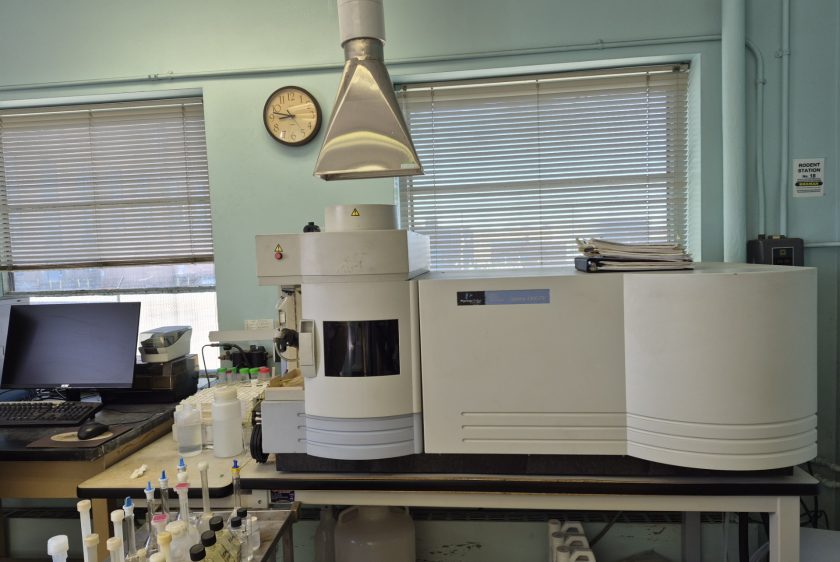
ICP-OES (Inductively Coupled Plasma): Used for ultra-trace Heavy Metals Analysis. This allows us to detect parts-per-billion (ppb) levels of metals, identifying corrosion long before it becomes visible to the naked eye.
Ion Chromatography (IC): For the precise measurement of aggressive anions like Chlorides and Sulfates, which are the primary drivers of stress-corrosion cracking in stainless steel.
Total Organic Carbon (TOC): Essential for high-purity process water and for identifying organic fouling that can “blind” expensive RO membranes.
Microbiological Profiling: We provide Heterotrophic Plate Counts (HPC) and ATP testing to monitor the “biological load” of your system, ensuring your biocide program is actually killing the bacteria it’s designed to target.
Strategic Management: Cycles of Concentration (CoC)
The most important metric for water conservation in Industrial Water Analysis is the Cycles of Concentration. This is the ratio of dissolved solids in the recirculating water versus the make-up water.
$$CoC = \frac{\text{Concentration in System Water}}{\text{Concentration in Make-up Water}}$$
Why CoC is the Key to ROI
If CoC is too low: You are “over-blowing” the system, wasting thousands of gallons of treated water and expensive chemicals.
If CoC is too high: You are saving water, but you are operating on the “ragged edge” of catastrophic scaling.
The Sterling Advantage: Our precise ion-balancing allows you to find the “Sweet Spot”—maximizing water savings while maintaining a safe buffer against scale formation.
Regulatory Compliance & Industry Standards
Sterling Analytical benchmarks your results against the industry’s most stringent guidelines to ensure your facility remains in good standing:
ASME (American Society of Mechanical Engineers): Standards for boiler feedwater and steam quality.
EPA / NPDES: Federal and state-level discharge limits for wastewater and Storm Water.
ASHRAE 188: The standard for managing Legionella risk in building water systems.
AWT (Association of Water Technologies): Best practices for industrial water treatment professionals.
How to Implement a Professional Testing Program
- System Mapping: Identify every point where water enters, circulates, or leaves your facility.
- Sampling Frequency: Establish a cadence (Weekly/Monthly/Quarterly) based on the “stress level” of your system and your regulatory permits.
- Standardized Collection: Use Sterling Analytical’s pre-cleaned, pre-preserved sampling kits to ensure sample integrity.
- Trend Analysis: Don’t look at reports in isolation. We provide historical data trending to help you identify “creeping” issues like slow resin exhaustion in a softener or a gradual increase in corrosion rates.
Optimize Your Industrial Water Systems with Precision Testing
Sterling Analytical delivers comprehensive industrial water analysis to help you control scale, prevent corrosion, and maximize system efficiency. From boilers and cooling towers to discharge compliance, our high-resolution data empowers engineers and EHS professionals to reduce costs, protect assets, and meet strict regulatory standards.
Take control of your water chemistry today:
Frequently Asked Questions
Field kits are excellent for daily "sanity checks," but they have high margins of error and are prone to "interferences." For example, high levels of one chemical can "mask" the presence of another. Laboratory analysis uses standardized EPA methods that remove these interferences, providing the "Gold Standard" for decision-making.
By preventing scale, you maintain maximum heat transfer efficiency. This means your boilers and chillers use less fuel and electricity, directly reducing your facility's Scope 1 and Scope 2 carbon emissions.
Carryover occurs when water droplets (containing dissolved solids) leave the boiler with the steam. This is caused by high alkalinity or high TDS. These solids then deposit onto downstream equipment like turbines, causing mechanical imbalance and catastrophic failure.
Yes. Sterling Analytical understands that a "water issue" is often a "production issue." We offer expedited turnaround times for critical troubleshooting and emergency compliance needs.
Quick Contact
If you have any questions or need help, feel free to contact with our team.
Send Us Email:
Call Us Today: