Landline Phone:
(413) 214-6541
Location:
15 Agawam Ave West Springfield, MA 01089
Mon - Fri:
8.00am - 4.00pm
Biomass Moisture Analysis: Managing the "Energy Killer"
Related Posts
In the world of solid biofuels, water is the primary antagonist. While wood, straw, and energy crops are excellent sources of renewable carbon, they are also highly hygroscopic—meaning they act like sponges, absorbing and retaining water from the atmosphere and the soil.
At Sterling Analytical, we consider Biomass Moisture Analysis to be the most critical “gatekeeper” test in your fuel quality program. Moisture content (MC) dictates everything from the net energy available for combustion to the physical stability of the fuel during storage. If you are buying biomass by the ton, you are often paying for water; if you are burning biomass for power, you are spending energy to evaporate that water before you can generate a single watt of electricity.
Our laboratory provides high-precision moisture determination using standardized loss-on-drying (LOD) techniques, ensuring that your “As-Received” data is accurate, defensible, and ready for use in financial settlements.
1. The Nature of Moisture in Biomass: Free vs. Bound
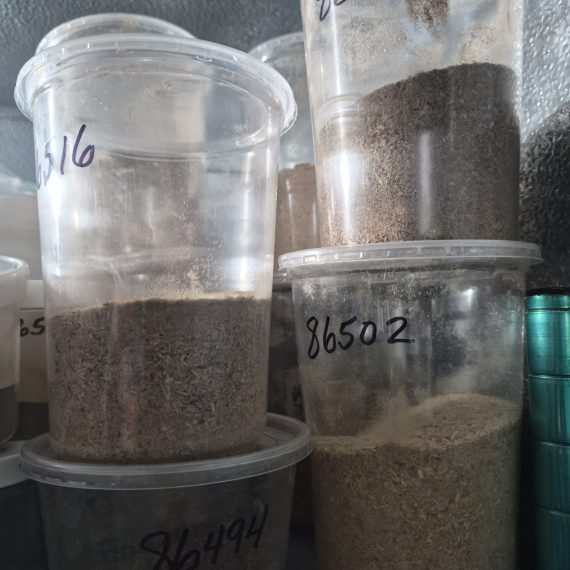
Biomass is a complex cellular structure composed of cellulose, hemicellulose, and lignin. Because of this biological origin, moisture exists in two distinct forms within the material:
A. Free Water (Surface Moisture)
This is the liquid water held within the cell cavities (lumens) and on the surface of the particles. It is relatively easy to remove through air-drying or mechanical processing. When a pile of wood chips “weeps” or feels damp to the touch, you are witnessing free water.
B. Bound Water (Inherent Moisture)
This water is chemically bonded via hydrogen bonds to the cell walls of the plant material. It is much more difficult to remove than free water. Even biomass that looks and feels “bone dry” can contain 10-15% bound water.
C. Equilibrium Moisture Content (EMC)
Biomass is constantly seeking “Equilibrium” with its environment. If the air is humid, the biomass will gain moisture; if the air is dry, it will lose it. Our analysis helps you determine the Equilibrium Moisture Content (EMC), which is vital for predicting how your fuel will behave during long-term storage in silos or outdoor piles.
2. Laboratory Testing Standards: Precision Over Guesswork
While handheld moisture meters are common in the field, they lack the precision required for industrial contracts or boiler efficiency tuning. Sterling Analytical utilizes primary laboratory methods to provide “Gold Standard” data.
ASTM E871: The Standard for Wood Fuels
For wood chips, sawdust, and hog fuel, we utilize ASTM E871. This method involves heating a large, representative sample (minimum 50 grams) in a forced-air oven at $103^\circ C$ to $105^\circ C$ until a constant mass is reached.
Why the temperature matters: If the temperature is too low, bound water remains trapped. If it is too high (above $105^\circ C$), the biomass may begin to “off-gas” volatile organic compounds (VOCs), which would be incorrectly recorded as moisture loss.
ISO 18134: The International Standard for Pellets
For the wood pellet industry, we follow ISO 18134. This standard is optimized for the high-density nature of pellets, ensuring that moisture is pulled from the core of the pellet without scorching the exterior. This is a critical test for meeting ENplus and PFI certification requirements.
Microwave & Infrared (IR) Moisture Analysis
For clients requiring rapid feedback (e.g., during a plant restart), we offer secondary instrumental methods. While faster, these are always calibrated against our primary oven-drying results to ensure accuracy.
3. The Economic Impact: Buying Fuel vs. Buying Water
The financial implications of moisture content cannot be overstated. Biomass is typically sold by weight (Green Tons), but its value is derived from its energy.
The "Water Penalty"
Consider a shipment of 1,000 tons of wood chips priced at $50 per ton.
At 30% Moisture: You have 700 tons of dry fuel.
At 45% Moisture: You have only 550 tons of dry fuel.
In this scenario, a 15% increase in moisture results in a $7,500 loss in actual fuel value for a single shipment. Sterling Analytical’s moisture reports provide the “Correction Factor” used in fuel supply agreements to adjust the invoice price based on the actual dry fiber delivered.
Transportation Costs
Water is heavy. Transporting biomass with 50% moisture means that half of your trucking budget is being spent on moving water. By utilizing our moisture analysis to optimize your drying or procurement strategy, you can significantly reduce your carbon footprint and logistics expenses.
4. Operational Impacts: Moisture and Boiler Efficiency
The presence of moisture in biomass doesn’t just dilute the fuel; it actively attacks the efficiency of the combustion process. At Sterling Analytical, we help plant engineers understand the “Thermal Penalty” associated with high-moisture feedstocks.
The Latent Heat of Vaporization
When biomass enters a boiler, the first stage of combustion is Dehydration. Before the wood or straw can ignite and release its chemical energy, the water within it must be heated to $100^\circ C$ and then converted into steam. This phase change requires a massive amount of energy—approximately 2,260 kJ/kg of water.
Energy Loss: This energy is “stolen” from the combustion process. It is never recovered as heat for steam generation because the water vapor escapes through the stack.
Combustion Temperature: High moisture lowers the “Adiabatic Flame Temperature.” If the temperature drops too low, combustion becomes incomplete, leading to high levels of Carbon Monoxide (CO) and unburned carbon in the ash.
Flue Gas Volume and Corrosion
Water vapor increases the total volume of flue gas moving through the system. This forces the induced draft (ID) fans to work harder, increasing parasitic power loads. Furthermore, if the flue gas cools below the “Acid Dew Point” before exiting the stack, the water vapor can combine with sulfur or chlorine (detected in our Biomass Ultimate Analysis) to form highly corrosive acids that eat away at economizers and ductwork.
5. Storage Risks: The Danger of "Biological Heating"
Moisture is the biological “on-switch” for degradation. When biomass is stored in large piles or silos with a moisture content above 20%, it becomes a breeding ground for bacteria and fungi.
Dry Matter Loss (DML)
As microbes consume the high-energy sugars and hemicellulose in the biomass, the physical weight of the fuel decreases. This is known as Dry Matter Loss. You may start with 1,000 dry tons, but after three months of damp storage, you may only have 950 dry tons remaining. The energy has literally “evaporated” as microbial heat.
Spontaneous Combustion
The heat generated by microbial activity can be trapped deep within a large pile of wood chips or agricultural residue. If the internal temperature reaches $60^\circ C$ to $70^\circ C$, chemical oxidation takes over from biological activity. This can lead to Self-Heating and, eventually, spontaneous combustion. Regular Biomass Moisture Analysis is your first line of defense in fire prevention for fuel yards.
Off-Gassing and Toxicity
Damp biomass in enclosed spaces (like ship hulls or silos) can off-gas dangerous levels of Carbon Monoxide (CO) and Carbon Dioxide ($CO_2$) while stripping oxygen from the air. We provide the moisture data necessary for safety officers to establish “Confined Space Entry” protocols based on the stability of the fuel.
6. Advanced Testing: Total vs. Inherent vs. Residual
At Sterling Analytical, we don’t just provide a single percentage; we break down the moisture profile to give you a complete picture of your fuel’s stability.
Total Moisture (TM): The sum of all water in the sample as it was collected. This is the value used for commercial invoicing.
Inherent Moisture (IM): The moisture remaining after the sample has reached equilibrium with the laboratory atmosphere. This represents the “Bound Water” that is naturally part of the plant structure.
Residual Moisture: The tiny fraction of water (usually <1%) that remains after standard drying, requiring specialized vacuum desiccation to remove. This is critical for high-precision research in Biomass Heating Value Analysis.
7. Industry-Specific Applications
Wood Pellet Production
For pellet mills, moisture control is a “Goldilocks” problem. If the sawdust is too dry (<8%), the lignin won’t soften, and the pellets won’t bind. If it is too wet (>12%), the pellets will “pop” and crumble (fines) or develop “shark skin” cracks. Our ISO 18134 testing ensures your mill is operating in the “Sweet Spot” for durability.
Waste-to-Energy (WtE)
Municipal Solid Waste (MSW) is notoriously high in moisture (food waste, grass clippings). WtE plants use our analysis to determine if they need to “co-fire” with drier fuels like recycled wood or plastics to maintain the minimum furnace temperature required by environmental permits.
Pulp & Paper Mills
Hog fuel (bark and wood waste) is a primary energy source for paper mills. Because bark has a different cellular structure than heartwood, it retains moisture differently. We provide specific moisture profiles for bark-heavy feedstocks to help optimize “Bark Press” operations.
8. Sampling Guidelines: The "Golden Rule" of Moisture
Moisture is the most volatile component of biomass. If your sampling technique is flawed, the lab results will be meaningless.
The “Airtight” Mandate: Samples must be placed in heavy-duty, vapor-proof bags (at least 4-mil thickness) or airtight plastic buckets immediately after collection. If a sample sits in an open bucket for even 30 minutes on a windy day, it can lose 2-5% of its moisture, resulting in a failed audit.
Composite Sampling: Moisture is never uniform in a pile. Take 10-15 small “increments” from different locations and depths, mix them in a large bucket, and then take your final lab sample from that mixture.
Avoid the “Surface Bias”: The top 6 inches of a biomass pile are almost always drier (due to sun) or wetter (due to rain) than the rest of the pile. Always dig past the surface layer to get a representative sample.
Shipment Speed: Send your samples to Sterling Analytical via overnight or 2-day shipping. Even in a sealed bag, biological activity can shift the moisture profile over long periods.
Moisture & Chemical Exposure Testing: The Science of Synergistic Degradation
Sterling Analytical delivers advanced testing solutions to evaluate how moisture and chemical exposure interact to accelerate material degradation. Our specialized analysis provides the critical data needed to understand synergistic effects, assess durability, and predict long-term performance in demanding environments.
With NIST-traceable results, we support engineers, manufacturers, and environmental specialists in identifying failure mechanisms, optimizing material selection, and ensuring compliance with industry standards and safety requirements.
Take the next step with our expert laboratory services:
Frequently Asked Questions
Most industrial biomass boilers are designed for a range of 25% to 45% moisture. Once you exceed 50%, the "Net Heating Value" drops so low that the fire may become self-extinguishing without the support of auxiliary natural gas or oil burners.
No. Handheld meters measure electrical resistance or capacitance, which is heavily influenced by the wood species, density, and temperature. They are great for quick checks, but only the Oven-Dry Method (ASTM E871) is legally defensible for fuel contracts.
No. Air-dried biomass will reach "Equilibrium" with the local humidity. In a humid coastal area, air-dried wood may still contain 15-18% moisture. Only laboratory oven-drying at $105^\circ C$ can reach a "Dry Basis" state.
This is usually due to "Sample Preparation" errors. If one lab grinds the sample while it is still wet, they lose moisture during the grinding process. Sterling Analytical uses a "Two-Stage Drying" process to prevent this error, ensuring the highest possible accuracy.
Quick Contact
If you have any questions or need help, feel free to contact with our team.
Send Us Email:
Call Us Today: