Landline Phone:
(413) 214-6541
Location:
15 Agawam Ave West Springfield, MA 01089
Mon - Fri:
8.00am - 4.00pm
Organic Matter Soil Test Services
Related Posts
Sterling Analytical provides specialized organic matter soil testing for agricultural producers, environmental scientists, landscape architects, and civil engineers. Soil Organic Matter (SOM) is the primary indicator of soil health, fertility, and structural stability. It is a complex mixture of plant and animal residues at various stages of decomposition, microbial cells, and highly polymerized humus. Our laboratory supports these diverse industries with comprehensive organic carbon analysis designed to quantify the biological “engine” of the soil.
Through certified ASTM and AOAC methodologies, our organic matter testing services evaluate the total organic carbon (TOC), nitrogen content, and carbon-to-nitrogen (C) ratios. We generate defensible analytical data used to support precision agriculture, carbon sequestration verification, environmental remediation monitoring, and construction site suitability assessments. If you are searching for a soil testing laboratory near me to evaluate soil health or topsoil quality, Sterling Analytical offers the technical precision and rapid turnaround times required to manage your land assets effectively.
The amount of organic matter in soil influences everything from water-holding capacity and nutrient cycling to the engineering properties of the subsurface. In agriculture, high organic matter is a sign of productivity; in construction, it is often a sign of instability. Our laboratory-based organic matter analysis programs provide a detailed biological and chemical profile of your soil, allowing for informed decisions in both the field and the office.
Organic Matter Testing Capabilities
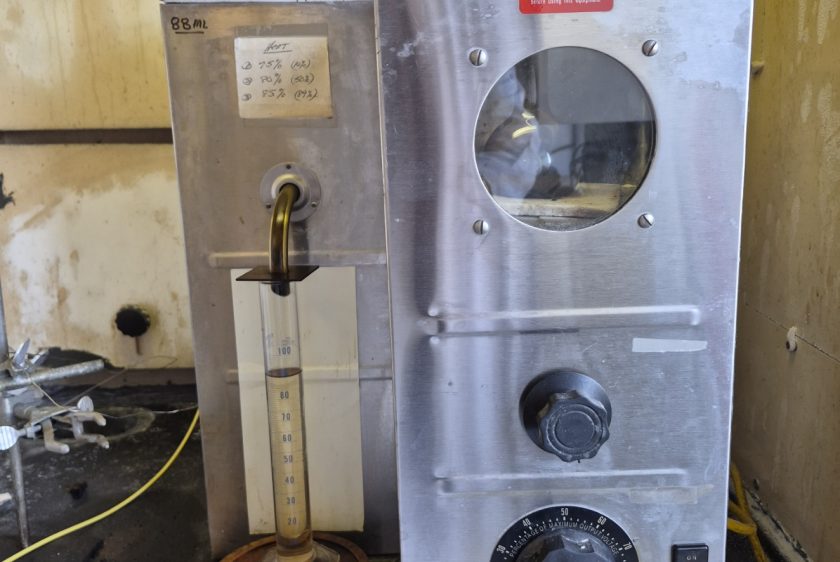
Sterling Analytical utilizes a range of thermal and chemical oxidation techniques to provide a precise measurement of organic fractions within the soil matrix.
Core Organic Matter Testing Package
The core package provides the fundamental data required for soil health assessment and topsoil specification compliance.
Loss on Ignition (LOI) – ASTM D2974: This is the most common method for determining organic content. By heating the soil to high temperatures (typically 440°C), the organic fraction is "burned off," and the weight loss is measured. This is the industry standard for geotechnical and general agricultural applications.
Walkley-Black Chromic Acid Oxidation: A more precise chemical method used to measure "active" organic carbon. This technique is preferred for high-precision agricultural research as it focuses on the carbon that is most readily available for microbial activity.
Total Organic Carbon (TOC) – EPA Method 415.1: Utilizing high-temperature combustion and infrared detection, TOC analysis provides the most accurate measurement of the carbon atom concentration, essential for carbon credit verification and environmental studies.
Moisture Content – ASTM D2216: Since organic matter is highly hygroscopic (water-attracting), measuring the natural moisture content is vital for interpreting organic matter percentages accurately.
Advanced Soil Health & Carbon Analysis
For large-scale farming operations, carbon sequestration projects, or complex remediation sites, we provide expanded analytical suites.
Carbon-to-Nitrogen (C) Ratio: This ratio determines how quickly organic matter will decompose. A high C ratio (e.g., >30:1) can lead to "nitrogen tie-up," where microbes consume all available nitrogen, leaving none for plants.
Total Kjeldahl Nitrogen (TKN): Measures the sum of organic nitrogen and ammonia. This is a critical component in calculating fertilizer requirements and environmental nitrogen loading.
Humic and Fulvic Acid Analysis: Quantifies the stable, long-term organic fractions that contribute to soil cation exchange capacity (CEC) and long-term structure.
Particulate Organic Matter (POM): Analyzes the "young" organic matter that is in the early stages of decomposition, providing a leading indicator of soil health changes.
Soil Respiration (CO2 Burst): A biological test that measures the activity of soil microbes, providing a "heartbeat" of the soil’s biological productivity.
Why Organic Matter Analysis is Essential
Organic matter is the “multitool” of the soil environment, performing critical functions across multiple industries.
1. Agricultural Productivity & Nutrient Cycling
Organic matter acts as a slow-release reservoir for essential nutrients like nitrogen, phosphorus, and sulfur. As microbes break down organic matter, these nutrients are mineralized into forms that plants can absorb. Our testing helps farmers determine if their soil has the biological “bank account” necessary to support high-yield crops without excessive chemical inputs.
2. Water Holding Capacity & Drought Resilience
Organic matter can hold up to 20 times its weight in water. In sandy soils, increasing organic matter is the most effective way to prevent leaching and improve drought tolerance. Conversely, in heavy clay soils, organic matter improves “tilth” and aeration, preventing waterlogging and root rot.
3. Construction & Engineering Risks
From an engineering perspective, organic matter is often a contaminant. Soils with high organic content (like peat or organic silts) are highly compressible and have low shear strength. Using soil with high organic matter as structural fill can lead to severe settlement of foundations and pavements. Our ASTM D2974 testing ensures that “Select Fill” meets the low-organic requirements of structural engineers.
4. Carbon Sequestration & Climate Goals
Soil is the largest terrestrial carbon sink on Earth. As carbon markets develop, precise organic matter and TOC testing are required to verify that “regenerative” farming practices are actually removing CO2 from the atmosphere and storing it in the soil as stable organic carbon.
Compliance Overview
Organic matter testing is a requirement for many municipal and state-level projects. Our laboratory ensures your data meets the specifications of the DOT (Department of Transportation) for “Topsoil” and “Planting Soil” used in highway landscaping and erosion control. We also support compliance with EPA guidelines for the application of biosolids and compost-amended soils in environmental remediation projects, ensuring all materials meet the required organic-to-mineral ratios.
Common Problems Identified
During routine organic matter testing, our laboratory frequently identifies:
Organic Depletion: Soils with <1% organic matter that are biologically “dead” and prone to erosion.
Nitrogen Tie-Up: High C ratios caused by uncomposted wood chips or straw, leading to stunted plant growth.
Excessive Organic Loading: Over-application of manure or compost leading to nutrient runoff and water pollution.
Structural Instability: High organic content in subgrade soils that will cause future foundation settlement.
Hydrophobic Soils: Extreme organic buildup (often after fires) that prevents water from infiltrating the ground.
Who Needs Organic Matter Soil Testing?
Commercial Farmers: Optimizing soil health and reducing reliance on synthetic fertilizers.
Landscape Architects: Specifying topsoil mixes for parks, golf courses, and green roofs.
Civil Engineers: Identifying “unsuitable” organic soils during the geotechnical phase of construction.
Environmental Consultants: Monitoring the success of “landfarming” remediation projects.
Compost Producers: Verifying the organic density and maturity of their products.
Carbon Project Developers: Quantifying soil carbon stocks for the generation of carbon credits.
How to Submit a Soil Health Sample
Request a Soil Health Kit: We provide specialized containers and instructions for maintaining the biological integrity of the sample.
Collect a Composite Sample: Organic matter can vary significantly across a field. Collect 10-15 small “plugs” from the top 6 inches of soil and mix them in a clean plastic bucket.
Avoid Contamination: Do not use galvanized or rusty tools, as these can skew chemical results. Use stainless steel or plastic.
Complete the Chain of Custody: Indicate if the sample is for agricultural use (Walkley-Black/C) or construction use (ASTM D2974 LOI).
Ship to Our Laboratory: For biological tests (respiration), samples should be shipped via overnight courier to ensure the microbes remain active.
Schedule Organic Matter Soil Testing Today
Healthy soil is the foundation of productive agriculture, stable construction, and effective environmental management. Without accurate organic matter analysis, critical decisions about land use, fertility programs, and site suitability are based on assumptions rather than data.
Sterling Analytical provides precise, laboratory-based organic matter testing to quantify soil health, evaluate carbon content, and identify potential risks related to nutrient imbalance or structural instability. Our certified methodologies deliver defensible results for agricultural planning, engineering design, and environmental compliance.
Frequently Asked Questions
For most vegetable gardens and landscapes, an organic matter content of 5% to 8% is considered ideal.
Not exactly. Organic matter is the total weight of the material, while organic carbon is the specific carbon atom content. Generally, organic matter is about 58% carbon (the Van Bemmelen factor).
Yes. Adding too much uncomposted material can lead to a "C imbalance," which temporarily starves your plants of nitrogen as microbes work to break down the excess carbon.
Yes. Sterling Analytical is a certified laboratory, and our LOI (Loss on Ignition) reports are the industry standard for verifying that structural fill is free of organic debris.
Quick Contact
If you have any questions or need help, feel free to contact with our team.
Send Us Email:
Call Us Today: