Landline Phone:
(413) 214-6541
Location:
15 Agawam Ave West Springfield, MA 01089
Mon - Fri:
8.00am - 4.00pm
Soil Corrosion Testing Services
Related Posts
Sterling Analytical provides specialized soil corrosion testing services designed to protect the integrity of buried metal and concrete infrastructure. In the subsurface environment, soil acts as a complex electrolyte that can facilitate rapid electrochemical degradation of pipelines, storage tanks, grounding systems, and structural pilings. Our laboratory supports corrosion engineers, utility operators, and geotechnical professionals with high-precision analytical data used to identify aggressive soil conditions before they lead to catastrophic asset failure.
Through certified ASTM methodologies and advanced electrochemical instrumentation, our soil corrosion testing services evaluate the specific chemical and physical properties that drive metal loss. We generate defensible analytical data used to support cathodic protection (CP) design, material selection for new construction, and long-term integrity management programs. If you are searching for a soil corrosivity laboratory near me, Sterling Analytical offers the regional expertise and rapid turnaround times required to mitigate the high cost of corrosion-related leaks, environmental contamination, and emergency repairs.
Corrosion is not a uniform process; it is highly dependent on localized soil “hot spots” where low resistivity, extreme pH, or high ion concentrations accelerate the flow of galvanic currents. Without structured soil testing, these aggressive conditions remain hidden until a breach occurs. Our laboratory-based soil analysis programs provide the “ground truth” needed to transform an unknown subsurface environment into a manageable engineering variable.
Soil Corrosion Testing Capabilities
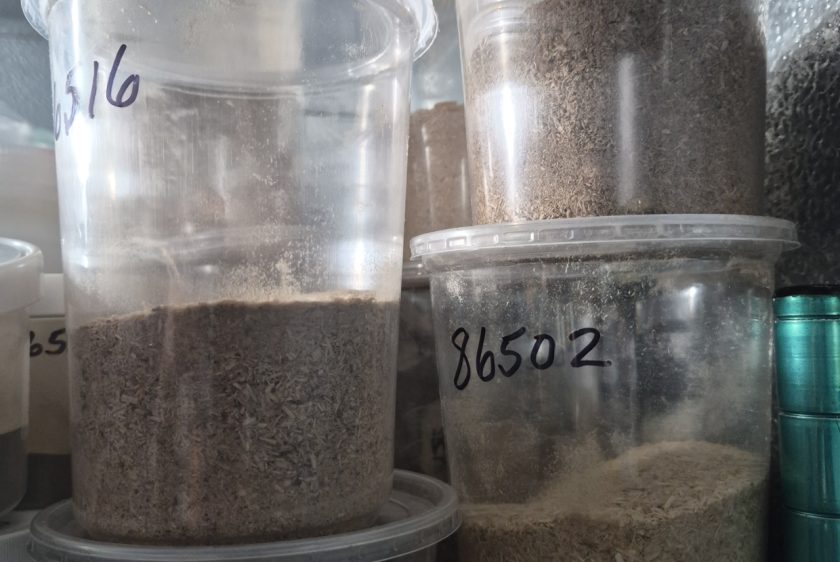
Sterling Analytical utilizes a multi-disciplinary approach to corrosivity characterization, combining physical resistivity measurements with detailed inorganic chemical analysis.
Core Soil Corrosivity Package
The core package is designed to provide the fundamental metrics required for the “Modified Miller” or “Romanoff” corrosivity scales, which are the industry standards for evaluating buried metals.
Soil Resistivity (Saturated) – ASTM G57: This is the single most critical indicator of soil corrosivity. We utilize the "Soil Box" method to measure the soil's resistance to electrical current. Low resistivity (typically <2,000 ohm-cm) indicates a highly conductive environment that facilitates rapid metal loss. We test samples in a 100% saturated state to simulate the "worst-case" seasonal moisture scenario.
Soil pH – ASTM G51 / ASTM D4972: Measures the acidity or alkalinity of the soil. While neutral soils (pH 6.5–7.5) are generally safer, highly acidic soils (pH <5.0) can aggressively dissolve protective oxide layers on steel and copper, while highly alkaline soils can damage protective pipe coatings.
Redox Potential (Oxidation-Reduction) – ASTM D1498: Evaluates the aeration and microbial potential of the soil. Low (negative) redox potential often indicates anaerobic conditions where sulfate-reducing bacteria (SRB) thrive, leading to severe localized pitting and Microbiologically Influenced Corrosion (MIC).
Sulfides (Qualitative/Quantitative): Detects the presence of sulfides, which are often a byproduct of bacterial activity and are highly corrosive to ferrous metals and ductile iron.
Advanced Chemical & Ion Analysis
For detailed engineering design, such as sizing sacrificial anodes or selecting specialized alloys, we provide expanded ion-specific testing.
Chloride Content – ASTM D512: Chlorides are aggressive "pitting" ions that can penetrate even high-quality protective coatings. They are frequently found in coastal regions or areas affected by winter road-salt runoff.
Sulfate Content – ASTM D516: High sulfate concentrations are double-threats; they are corrosive to metals and also cause "sulfate attack" on concrete foundations and pilings, leading to chemical expansion and structural crumbling.
Bicarbonates & Carbonates: These ions affect the soil's buffering capacity and its tendency to form protective mineral scales on metal surfaces.
Total Soluble Salts: Measures the total ionic concentration in the soil, which directly correlates to the electrolyte strength and overall corrosive potential
Moisture Content – ASTM D2216: Since corrosion is an electrochemical process requiring water, the natural moisture-holding capacity of the soil is a key factor in the long-term corrosion rate.
Why Corrosion Testing is Essential for Asset Management
The proactive cost of soil corrosion testing is a fraction of 1% of the cost of a pipeline failure or a foundation collapse.
1. Optimization of Cathodic Protection (CP) Systems
Cathodic protection works by making the buried metal the “cathode” of an electrochemical cell. To design these systems, engineers must know the soil resistivity to calculate the current requirements and the number of anodes needed. Testing ensures the CP system is neither under-designed (leading to failure) nor over-designed (wasting capital).
2. Material Selection and Life-Cycle Costing
Not all soils require expensive stainless steel or specialized coatings. Accurate soil testing allows engineers to use more cost-effective materials like carbon steel or ductile iron in “mild” soils, while reserving high-performance materials for “aggressive” zones identified by the lab.
3. Environmental Risk and Liability
For industries managing Underground Storage Tanks (UST) or hazardous liquid pipelines, a corrosion-related leak is a massive environmental and legal liability. Soil testing is a primary component of “Due Diligence,” proving that the operator took all necessary steps to monitor and mitigate the risk of a breac
4. Stray Current Analysis
In urban environments, DC currents from transit systems or high-voltage power lines can “jump” onto buried pipes, causing rapid stray-current corrosion. Soil analysis helps identify the conductive paths these currents are likely to follow.
Compliance Overview
Soil corrosion testing is a regulatory requirement for many critical industries. Our laboratory procedures support compliance with DOT (Department of Transportation) and PHMSA (Pipeline and Hazardous Materials Safety Administration) regulations under 49 CFR Parts 192 and 195, which mandate the monitoring and mitigation of external corrosion on natural gas and hazardous liquid pipelines. We also adhere to NACE (National Association of Corrosion Engineers) standards for data collection and reporting.
Common Problems Identified
During routine soil corrosion testing, our laboratory frequently identifies:
Extreme Low Resistivity: Identifying “hot” soil zones that will consume standard steel in less than 10 years.
Sulfate-Reducing Bacteria (SRB) Risk: Low redox values indicating a high potential for microbial pitting.
Corrosive Road-Salt Plumes: High chloride levels in soils adjacent to highways and bridges.
Concrete Degradation Potential: Sulfate levels that exceed the thresholds for standard Type I/II Portland cement.
Coating Interference: pH levels that are incompatible with specific epoxy or polyethylene pipe wraps.
Who Needs Soil Corrosion Testing?
Pipeline Operators: Ensuring the longevity of natural gas, petroleum, and water transmission lines.
Utility Companies: Protecting buried electrical grounding grids and telecommunications cables.
Civil & Geotechnical Engineers: Designing bridge abutments, reinforced earth walls, and structural pilings.
Renewable Energy Developers: Analyzing soil for solar farm racking systems and wind turbine foundations.
Industrial Facility Managers: Managing the integrity of underground fire-water loops and process piping.
Municipalities: Testing soil for new water main installations and wastewater treatment infrastructure.
How to Submit a Soil Corrosion Sample
Request a Sampling Guide: We provide detailed instructions on how to collect “undisturbed” samples that represent the soil at the depth of the buried asset.
Collect Samples: Use clean tools to collect 2-5 lbs of soil. Samples should be taken at the “pipe invert” depth or the foundation bearing depth.
Seal and Label: Place samples in heavy-duty, airtight plastic bags to preserve natural moisture. Label clearly with site ID, boring number, and depth.
Complete the Chain of Custody: Specify the required tests (e.g., “Full Corrosivity Suite”).
Ship to Our Laboratory: Use our tracked shipping options for rapid delivery to our analytical facility.
Schedule Soil Corrosion Testing Today
Infrastructure reliability starts below the surface. Without proper soil corrosion testing, hidden corrosive conditions can accelerate metal degradation and lead to costly failures.
Sterling Analytical delivers comprehensive laboratory-based to assess corrosivity, identify risks, and support regulatory compliance programs.
Frequently Asked Questions
Soil resistivity (ASTM G57) is the primary metric, as it determines how easily electrical currents (which drive corrosion) can flow through the soil.
Samples must be taken at the depth where the metal or concrete will be in contact with the soil. Surface samples are rarely representative of the conditions 5 or 10 feet underground.
Yes. We perform "saturated resistivity" testing in the lab to find the lowest possible resistance the soil will ever reach, ensuring your design accounts for the most corrosive seasonal conditions.
Yes. Water, sediment, and microbial contamination can clog filters, corrode components, foul injectors, and cause startup failure.
Yes. By combining Redox potential, Sulfide testing, and moisture analysis, we can provide a high-confidence assessment of the risk posed by anaerobic bacteria.
Quick Contact
If you have any questions or need help, feel free to contact with our team.
Send Us Email:
Call Us Today: