Landline Phone:
(413) 214-6541
Location:
15 Agawam Ave West Springfield, MA 01089
Mon - Fri:
8.00am - 4.00pm
Wet Chemical Digestion & Sample Preparation Services
Related Posts
Sterling Analytical provides expert wet chemical digestion and sample preparation services, the most critical phase of the analytical process. In the world of laboratory science, the quality of the final data is entirely dependent on the quality of the initial preparation. Many environmental and industrial samples—such as soil, sludge, electronic waste, and thick oils—cannot be analyzed in their raw state. They must first be “digested” or broken down into a clear, homogenous liquid form that can be processed by advanced instrumentation like ICP-MS or ICP-OES.
Our laboratory utilizes a range of aggressive acid digestion techniques, including EPA Method 3050B and microwave-assisted digestion (EPA 3051A), to ensure the complete recovery of target analytes. Whether you are performing a hazardous waste characterization or monitoring heavy metals in industrial sludge, Sterling Analytical’s sample preparation protocols eliminate “matrix interference” and ensure that every microgram of contaminant is accounted for.
If you are searching for a sample preparation laboratory near me to handle complex or “difficult” matrices, Sterling Analytical offers the specialized equipment and chemical expertise required to transform raw waste into defensible data. We understand that improper digestion leads to “false negatives” and under-reported concentrations, which is why we adhere to the strictest NIST-traceable standards for every sample we process.
Our Digestion & Preparation Capabilities
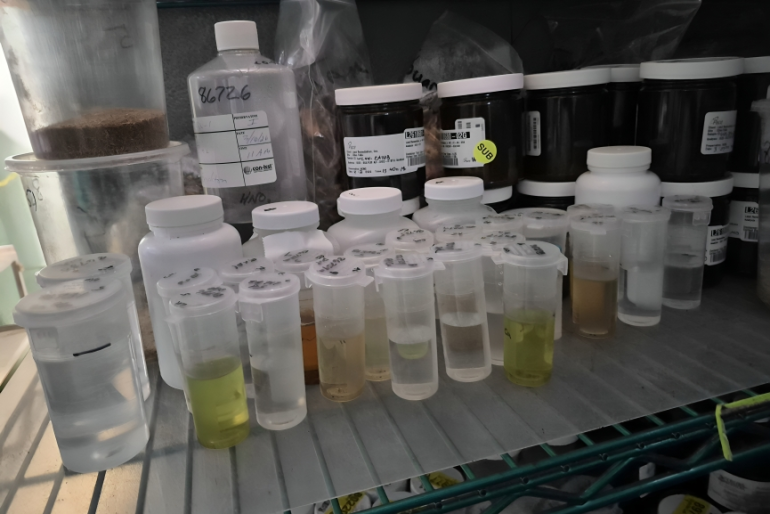
Sterling Analytical’s wet chemistry department is equipped with high-purity acid reagents, automated digestion blocks, and closed-vessel microwave systems to handle a diverse array of sample types.
1. Acid Digestion for Solids and Sludges (EPA 3050B)
This is the industry-standard “hot plate” digestion method for the analysis of metals in soil, sediments, and sludges.
Nitric Acid (HNO3) Digestion: Used to oxidize organic matter and solubilize most metals.
Hydrochloric Acid (HCl) Addition: Essential for the stabilization of certain metals like Antimony, Thallium, and high concentrations of Iron and Aluminum.
Hydrogen Peroxide (H2O2) Finishing: Used to complete the oxidation of complex organic molecules, ensuring a clear, particle-free digestate.
2. Microwave-Assisted Digestion (EPA 3051A / 3015A)
For samples that are resistant to traditional hot-plate heating, microwave digestion provides superior results through high temperature and pressure.
Closed-Vessel Technology: By performing the digestion in a sealed Teflon vessel, we can reach temperatures far above the boiling point of the acids, breaking down even the most stubborn mineral matrices.
Analyte Retention: Because the system is sealed, volatile elements (like Mercury or Selenium) are trapped and recovered, whereas they might be lost to evaporation in an open-beaker method.
Speed and Consistency: Microwave digestion provides a level of heating uniformity that traditional methods cannot match, reducing “batch-to-batch” variability.
3. Liquid Sample Preparation (EPA 3010A / 3020A)
Even liquid samples often require preparation if they contain suspended solids or complex organic ligands that could “mask” the metals during analysis.
Total Recoverable Metals: Digestion of the entire unfiltered sample to account for metals bound to suspended particles.
Dissolved Metals Preparation: Precise field or lab filtration (0.45 µm) followed by acid stabilization to measure only the metals actually dissolved in the water.
4. Specialized Extractions (TCLP / SPLP)
While often categorized under waste characterization, these are essentially large-scale wet chemical extractions.
Toxicity Characteristic Leaching Procedure (TCLP): Simulating the leaching of contaminants in a landfill environment using acetic acid.
Synthetic Precipitation Leaching Procedure (SPLP): Simulating the impact of “acid rain” on soils and wastes to determine groundwater contamination risk.
The Chemistry of a Perfect Digestion
Digestion is not simply “dissolving” a sample; it is a controlled chemical destruction of the sample matrix.
1. The Role of Oxidizing Acids
Nitric acid is the workhorse of the digestion lab because it is a powerful oxidizing agent. It breaks the carbon-carbon bonds in organic matter, converting solids into soluble nitrates. For more “refractory” or mineral-based samples, we may utilize Aqua Regia (a 3:1 mix of HCl and HNO3), which generates “nascent chlorine” and nitrosyl chloride—chemicals aggressive enough to dissolve gold and platinum.
2. Managing Matrix Interference
A common problem in wet chemistry is a “partial digestion,” where the target metal remains trapped inside a silicate (sand) grain or a plastic polymer. Sterling Analytical’s chemists monitor the physical state of the digestate; if a sample remains cloudy or colorful after the standard protocol, we utilize secondary oxidation steps to ensure 100% recovery.
3. Cleanliness and Trace-Metal Grade Reagents
When measuring parts-per-billion (ppb) levels of metals, the acids themselves can be a source of contamination. Sterling Analytical uses only Trace-Metal Grade or Optima-Grade acids, which are distilled to remove virtually all background impurities. Our digestion blocks are located in specialized exhaust hoods to prevent cross-contamination from the laboratory environment.
The Engineering Importance of Proper Sample Prep
1. Hazardous Waste Determination (RCRA)
Under the Resource Conservation and Recovery Act (RCRA), the difference between “Hazardous” and “Non-Hazardous” waste can come down to a few milligrams per kilogram. If a digestion is incomplete, a waste generator might incorrectly label a hazardous waste as safe, leading to massive legal liabilities and environmental damage.
2. Industrial Wastewater Pre-treatment
Industrial facilities must often remove metals like Chrome, Nickel, and Zinc before discharging to the sewer. Our digestion services allow these facilities to see the “Total” metal load, including the metals hidden in the “floc” or sludge, ensuring their treatment systems are sized correctly.
3. Product Stewardship and E-Waste
As electronics recycling becomes more prevalent, companies need to know the exact precious metal and toxic metal content of shredded circuit boards and components. These samples are notoriously difficult to digest due to the presence of flame retardants and ceramics. Our microwave digestion capabilities are specifically suited for these high-complexity materials.
Compliance and Quality Control
Sterling Analytical follows a rigorous QA/QC framework for every digestion batch:
Method Blanks: Digestion of pure acid to ensure no contamination was introduced during the process.
Laboratory Control Samples (LCS): Digesting a “known” standard to verify that the recovery percentage is within EPA-mandated limits (typically 80–120%).
Matrix Spikes (MS/MSD): Adding a known amount of metal to your actual sample to see if your specific matrix is interfering with the chemistry.
Standard Methods (SM) & EPA Compliance: All prep follows the SW-846 compendium of methods.
Problems Identified
Through expert sample preparation, we frequently identify:
Under-Reporting of Lead: Caused by improper acid stabilization in the field.
Incomplete Digestion of Sludge: Where metals were “shielded” by high organic content.
Volatile Metal Loss: Identifying cases where open-vessel digestion led to the loss of Mercury or Arsenic.
Matrix Suppression: Identifying salts or minerals in the digestate that would have caused the ICP-MS to provide inaccurate readings.
Who Needs Digestion & Sample Prep?
Environmental Consultants: For Phase II ESAs and soil remediation projects.
Industrial Manufacturers: For waste characterization and raw material purity testing.
Recycling Facilities: For “Assay” testing of scrap metal and e-waste.
Municipalities: For the analysis of biosolids and sewage sludge prior to land application.
Mining Companies: For the analysis of ore samples and tailings.
How to Submit a Sample for Digestion
Sample Mass: For soil or sludge, provide at least 100g to 250g. This allows for multiple “re-digests” if the matrix proves difficult.
Container Type: Use wide-mouth HDPE or glass jars. Ensure the lids are lined and leak-proof.
Homogenization: If your sample is “chunky” (e.g., soil with rocks), let us know if you want the rocks excluded or if the entire sample should be ground/milled before digestion.
Preservation: For solids, keep samples at 4°C. For liquids, we can perform the acid stabilization (HNO3 to pH < 2) in the lab if you are unable to do so in the field.
Safety Data Sheets (SDS): If the sample is known to be highly toxic, reactive, or contains hydrofluoric acid, please include an SDS for the safety of our lab technicians.
Get Accurate, Defensible Results—Start Your Analysis Today
Whether you need expert sample digestion, pH testing, or full chemical analysis, Sterling Analytical delivers precise data you can trust for compliance, engineering, and environmental decision-making.
Frequently Asked Questions
"Total" metals usually involve a more aggressive digestion (often using Hydrofluoric acid) to break down silicates. "Total Recoverable" (EPA 3050B) uses Nitric and Hydrochloric acids to dissolve all metals that are "environmentally available," which is the standard for most regulatory work.
It requires specialized, high-pressure Teflon vessels and advanced equipment. However, it provides much better accuracy for difficult samples and ensures that volatile elements are not lost.
Yes, but these often require "Oxygen Bomb" combustion or specialized microwave programs. Please contact our technical team to discuss your specific polymer matrix.
A standard acid digestion takes 2–4 hours of "active" heating time, plus cooling and filtration. This is why "Same Day" turnaround for metals is difficult, as the preparation phase cannot be rushed without sacrificing quality.
Quick Contact
If you have any questions or need help, feel free to contact with our team.
Send Us Email:
Call Us Today: