Landline Phone:
(413) 214-6541
Location:
15 Agawam Ave West Springfield, MA 01089
Mon - Fri:
8.00am - 4.00pm
Gravimetric Analysis Services
Related Posts
Sterling Analytical provides high-precision gravimetric analysis services, the “gold standard” of analytical chemistry. Unlike instrumental methods that rely on electronic sensors, light absorption, or electrochemical reactions, gravimetric analysis is an absolute method. It relies on the most fundamental physical property: mass. By isolating a specific constituent and weighing it on a micro-analytical balance, we provide data that is inherently more stable and less prone to the “matrix interference” that can plague other chemical tests
Our laboratory utilizes advanced gravimetric techniques—including precipitation, volatilization, and solvent extraction—to quantify contaminants in water, wastewater, and industrial process streams. Whether you are monitoring Oil & Grease (HEM) for a discharge permit or requiring a high-accuracy Sulfate determination for a mining project, Sterling Analytical delivers the defensible, NIST-traceable data required for regulatory compliance.
In an era of high-speed automated sensors, gravimetric analysis remains the bedrock of the wet chemistry laboratory. It is the primary method used to calibrate other instruments and is often the final “referee” method in legal or regulatory disputes. If you are searching for a gravimetric testing lab near me that prioritizes precision and adherence to strict EPA and ASTM protocols, Sterling Analytical offers the technical rigor your project demands.
Our Gravimetric Testing Capabilities
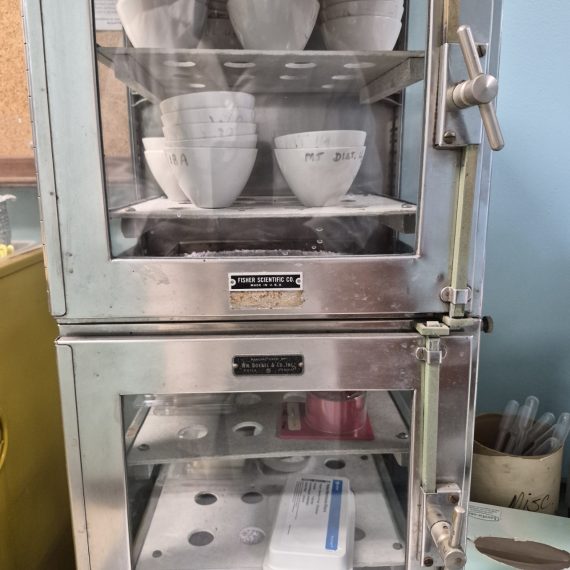
Sterling Analytical’s gravimetric department is equipped with 5-decimal place analytical balances, forced-air drying ovens, and high-temperature muffle furnaces, all maintained within a climate-controlled environment to prevent error from humidity and buoyancy.
1. Oil & Grease (n-Hexane Extractable Material - HEM)
Oil and grease are among the most difficult contaminants to manage in wastewater. They clog pipes, coat biological treatment systems, and create unsightly “sheens” on receiving waters.
EPA Method 1664A/B: The industry standard for determining HEM. We utilize n-hexane as the extraction solvent, followed by the evaporation of the solvent and the precise weighing of the remaining fatty acids, oils, waxes, and greases.
Silica Gel Treated HEM (SGT-HEM): Also known as “Non-Polar Material” or “Total Petroleum Hydrocarbons (TPH).” By treating the extract with silica gel, we remove animal fats and vegetable oils, leaving only the mineral-based hydrocarbons (petroleum).
Industrial Pre-treatment Compliance: We provide the verified data needed to meet municipal “Limit of Discharge” requirements for grease traps and oil-water separators.
2. Sulfate by Precipitation (SM 4500-SO4-2 C)
While many labs use turbidimetric or ion chromatography methods for sulfate, the gravimetric method remains the most accurate for high-concentration samples.
Barium Sulfate Precipitation: Sulfate ions are precipitated in a hydrochloric acid medium with barium chloride. The resulting barium sulfate precipitate is filtered, washed, ignited at 800°C, and weighed.
High-Concentration Accuracy: This method is ideal for industrial brines, mining runoff, and cooling tower blowdown where other methods might suffer from dilution errors.
3. Moisture and Ash Content
Quantifying the non-liquid and non-organic portions of a sample is critical for waste characterization and material science.
Total Solids & Moisture (ASTM D2216): Determining the water content of soils, sludges, and industrial byproducts through controlled evaporation at 105°C.
Loss on Ignition (LOI) / Ash Content: Subjecting samples to 550°C–1000°C in a muffle furnace to determine the inorganic mineral residue (ash) remaining after all organic matter has been oxidized.
4. Particulate Matter and Residues
Total Suspended Solids (TSS): As detailed in our solids post, this is a core gravimetric test involving the filtration and weighing of suspended particles.
Non-Volatile Residue (NVR): Used in the aerospace and semiconductor industries to ensure that solvents and cleaning agents do not leave behind microscopic films that could cause equipment failure.
The Science of the Analytical Balance
The heart of gravimetric analysis is the analytical balance. At Sterling Analytical, we treat mass determination as a high-precision engineering task.
1. The "Constant Weight" Protocol
In gravimetric analysis, a sample is never weighed just once. To ensure all moisture or solvent has been removed, we follow a “dry-cool-weigh” cycle. The sample is dried in an oven, cooled in a desiccator (to prevent moisture absorption from the air), and weighed. This process is repeated until the weight change between cycles is less than 0.5 mg. This ensures that the data we report is the “true” mass of the analyte.
2. Environmental Controls and Buoyancy
Micro-balances are sensitive enough to detect the weight of a fingerprint or the effect of static electricity. Our lab utilizes anti-static ionizing bars and marble vibration-dampening tables. We also account for “air buoyancy”—the fact that an object weighs slightly less in air than in a vacuum—ensuring that our results meet the highest standards of metrological traceability.
3. Solvent Recovery and Environmental Safety
In methods like EPA 1664, the use of n-hexane requires sophisticated solvent recovery systems. Sterling Analytical utilizes automated extraction systems that maximize solvent recovery, reducing our environmental footprint while ensuring that the extraction process is perfectly consistent from sample to sample.
The Engineering Importance of Gravimetric Data
1. Protecting Municipal Infrastructure
Excessive Oil & Grease in wastewater leads to “Fatbergs”—massive clogs of congealed grease and debris that can rupture sewer lines and cause backups. Municipalities use our gravimetric data to enforce “Sewer Use Ordinances,” ensuring that restaurants and industrial plants are properly maintaining their grease interceptors.
2. Mining and Acid Rock Drainage
In the mining industry, sulfate is a primary indicator of the oxidation of sulfide minerals. High sulfate levels can lead to the formation of sulfuric acid, which leaches heavy metals into the environment. Our high-precision gravimetric sulfate analysis provides the “mass balance” data needed to design effective lime-treatment systems.
3. Material Purity in Manufacturing
For manufacturers of chemicals and lubricants, “Non-Volatile Residue” (NVR) testing is a critical quality control step. If a solvent used to clean a precision part leaves behind even a milligram of residue, it can lead to adhesive failure or electrical short-circuits in the final product.
Compliance and Quality Assurance
Sterling Analytical adheres to the strictest regulatory frameworks:
EPA Method 1664A/B: Specifically for Oil & Grease in wastewater.
Standard Methods (SM) 2540: For all solids and residues
ASTM International: For moisture, ash, and industrial material characterization.
NIST Traceability: All analytical balances are calibrated daily using Class S weights traceable to the National Institute of Standards and Technology.
Problems Identified
Through gravimetric analysis, we frequently identify:
Grease Trap Bypass: High HEM levels indicating that an interceptor is full or improperly designed.
Incomplete Drying: Errors in on-site testing where samples were not held to “constant weight,” leading to over-reporting of solids.
Filter Clogging: Identification of specific particulate types that are blinding industrial filtration systems.
Petroleum Contamination: Using SGT-HEM to distinguish between “food grade” grease and “industrial” oil leaks.
Who Needs Gravimetric Analysis?
Industrial Pre-treatment Coordinators: Monitoring discharge from food processors, metal finishers, and laundries.
Mining Engineers: Tracking sulfate and total dissolved solids in tailings ponds.
Environmental Remediation Firms: Quantifying TPH (Total Petroleum Hydrocarbons) in groundwater.
Quality Control Managers: Ensuring solvents and raw materials meet purity specifications.
Municipal Sewer Districts: Identifying the sources of grease-related blockages in the collection system
How to Submit a Sample
Oil & Grease (HEM): Requires a 1-Liter Glass Bottle (Amber preferred). Do NOT use plastic, as oil will adhere to the plastic walls, leading to low results.
Preservation: HEM samples must be preserved with Sulfuric Acid (H2SO4) or Hydrochloric Acid (HCl) to a pH < 2 and cooled to 4°C.
Representative Sampling: For solids and grease, do not “composite” the sample. Take a “grab” sample directly from the flow, as grease is not uniformly distributed.
Sulfate/Solids: 500mL in an HDPE bottle, cooled to 4°C. No chemical preservation is required.
Hold Times: HEM has a 28-day hold time when properly preserved. Solids have a 7-day hold time.
Schedule Gravimetric Analysis Today
Accurate material characterization begins with precise measurement. Without proper gravimetric analysis, critical data on mass, composition, and residue content can be missed—leading to inefficiencies, quality issues, and unreliable results.
Sterling Analytical provides comprehensive laboratory-based gravimetric testing to determine solid content, quantify residues, and support environmental monitoring and regulatory compliance programs.
Frequently Asked Questions
Oil is hydrophobic and has a high affinity for plastic. If you use a plastic bottle, a significant portion of the oil will "stick" to the container and won't be transferred to the extraction flask, resulting in a false-low reading.
Because we are limited by the sensitivity of the balance and the weight of the weighing dish, the MDL for gravimetric tests is typically higher than instrumental tests (usually around 1–5 mg/L).
HEM (Hexane Extractable Material) measures all oils and greases. SGT-HEM (Silica Gel Treated) removes the biological fats (animal/vegetable) to leave only the petroleum-based hydrocarbons.
Field kits usually use turbidimetric methods, which are prone to interference from color or suspended particles. The gravimetric method is much more accurate as it physically isolates the sulfate as a solid precipitate.
Quick Contact
If you have any questions or need help, feel free to contact with our team.
Send Us Email:
Call Us Today: