Material Compatibility Testing
Landline Phone:
(413) 214-6541
Location:
15 Agawam Ave West Springfield, MA 01089
Mon - Fri:
8.00am - 4.00pm
Metal Corrosion & Leaching Analysis: The Science of Trace Element Migration
Related Posts
In the high-stakes world of industrial manufacturing, pharmaceutical production, and power generation, the integrity of a metal surface is often measured in microns. While a “leak” is a visible and obvious failure, the more insidious threat is Metal Leaching—the microscopic migration of metallic ions from a solid surface into a liquid medium.
At Sterling Analytical, we recognize that metal leaching is not merely a sign of equipment wear; it is a critical variable that impacts product purity, catalyst life, and regulatory compliance. Utilizing Inductively Coupled Plasma Optical Emission Spectroscopy (ICP-OES), our laboratory provides the ultra-trace sensitivity required to detect these events at the parts-per-billion (ppb) level, providing engineers with the data needed to prevent catastrophic failures and ensure the highest levels of Material Compatibility.
1. Defining the Challenge: Corrosion vs. Leaching
In the context of Material Compatibility Testing, it is essential to distinguish between the physical degradation of the asset and the chemical contamination of the process fluid.
The Asset Risk: Corrosion
Corrosion is the electrochemical oxidation of a metal in reaction with its environment. This process leads to the physical thinning of pipe walls, the formation of pits, and the eventual loss of structural integrity. In systems like Boilers or Cooling Towers, corrosion results in unscheduled downtime and massive capital expenditure for equipment replacement.
The Product Risk: Leaching
Leaching, conversely, focuses on the “Receiver Fluid.” A stainless steel reactor may show no visible signs of rust, yet it may be “shedding” Chromium, Nickel, or Molybdenum into the product. In the pharmaceutical and semiconductor industries, even a few parts-per-billion of these metals can “poison” a batch or ruin a silicon wafer. Leaching is the primary driver behind Extractables and Leachables (E&L) studies.
2. The Analytical Power of ICP-OES
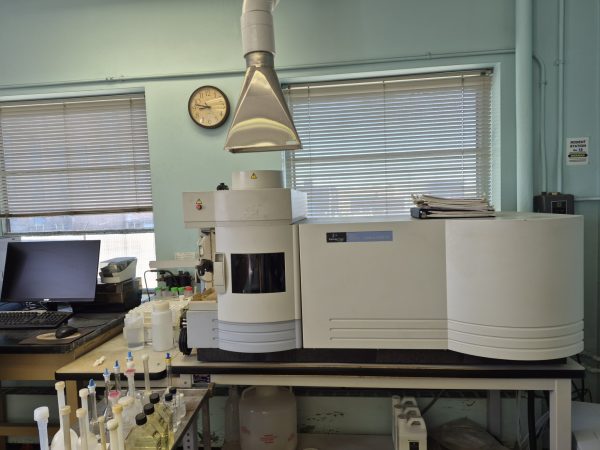
To detect the “invisible” migration of metals, Sterling Analytical utilizes ICP-OES (Inductively Coupled Plasma Optical Emission Spectroscopy). This technology is the “Gold Standard” for metal analysis due to its precision, speed, and multi-element capabilities.
How ICP-OES Works
- Nebulization: The liquid sample (the process fluid or “leachate”) is turned into a fine aerosol.
- The Plasma: This aerosol is injected into an Argon plasma torch. The temperature of this plasma is approximately 10,000 Kelvin—hotter than the surface of the sun.
- Atomic Emission: At these extreme temperatures, the metal ions are excited. As they return to their ground state, they emit light at specific wavelengths unique to each element.
- Detection: A high-resolution spectrometer measures the intensity of this light, which is directly proportional to the concentration of the metal in the sample.
Why ICP-OES is Superior to "Wet Chemistry"
Traditional colorimetric test kits are prone to “interferences”—where one chemical masks the presence of another. ICP-OES bypasses these issues by physically separating the light of each element. This allows us to test for 30+ metals simultaneously, from common elements like Iron (Fe) and Copper (Cu) to rare earth metals and heavy toxins like Lead (Pb) and Arsenic (As).
3. The "Indicator Metals": What Your Data is Telling You
When Sterling Analytical issues a leaching report, the specific metals identified provide a “fingerprint” of the failure mode occurring within your system.
Iron (Fe): The Universal Warning
Iron is the primary component of carbon steel and stainless steel. A spike in Iron levels in a closed-loop system is the first sign that your corrosion inhibitor program has failed. In Industrial Water Analysis, Iron levels are the “Pulse” of the system’s health.
Copper (Cu): The Heat Exchanger Sentinel
Copper leaching almost always points to the degradation of yellow metals—brass fittings, bronze pump impellers, or copper heat exchanger tubes. High copper levels are particularly dangerous in steel systems, as they can lead to Galvanic Corrosion, where the copper “plates out” onto the steel and causes rapid, localized pitting.
Chromium (Cr) & Nickel (Ni): Stainless Steel Integrity
Stainless steel relies on a microscopic “Passivation Layer” of Chromium Oxide. If the fluid is too acidic or contains high levels of Chlorides, this layer is stripped away. The presence of Chromium and Nickel in the leachate proves that the “stainless” property of the steel has been compromised.
Zinc (Zn): Dezincification and Coatings
Zinc is often found in galvanized coatings or as an alloying element in brass. “Dezincification” occurs when the zinc is selectively leached out of a brass fitting, leaving behind a porous, weak “sponge” of copper that will eventually burst under pressure.
4. Industry-Specific Applications for Leaching Analysis
Pharmaceuticals: USP and Compliance
The FDA and international regulators have strict limits on “Elemental Impurities” in drug products. We perform leaching studies on manufacturing equipment—valves, gaskets, and reactor walls—to ensure they do not contribute to the metal load of the final medication. This is critical for patient safety and avoiding costly batch rejections.
Semiconductor Fabrication: The Quest for "Zero"
In the semiconductor industry, “Ultra-Pure Water” (UPW) is used to wash wafers. Because UPW is so pure, it is “chemically aggressive” and will aggressively leach ions from any metal surface it touches. We use ICP-OES to validate that high-purity piping and fluoropolymer-lined vessels are truly inert.
Food & Beverage: Acidic Leaching
Many food products are naturally acidic (sodas, juices, sauces). When these fluids sit in metal containers or pass through dispensing lines, they can leach metals that affect flavor and safety. We perform compatibility testing to ensure that coatings and alloys are resistant to “Organic Acid Attack.”
Power Generation: Steam Purity
In high-pressure Boilers, metal leaching in the condensate return lines can be catastrophic. If Iron or Copper ions reach the boiler, they deposit on the high-heat-flux surfaces, causing “Under-Deposit Corrosion” and tube failure. Our ICP-OES analysis provides the “Early Warning” needed to adjust chemical dosing before damage occurs.
5. The Sterling Analytical Leaching Protocol
We don’t just “run a sample”; we design a simulation that mimics your real-world operating conditions. Our standard leaching study follows these four phases:
Phase I: Coupon Preparation
We use standardized metal “coupons” of the specific alloy in question (e.g., SS316L, Hastelloy C276, Aluminum 6061). These coupons are cleaned and weighed to a resolution of 0.1mg.
Phase II: The Extraction Environment
The coupon is immersed in the “Receiver Fluid” (the chemical or water it will encounter in the field). We then apply “Stressors”:
Temperature: Testing at ambient, 40°C, 70°C, or even 121°C (autoclave conditions).
Agitation: Simulating the flow of fluid through a pipe.
Surface Area to Volume (SA/V) Ratio: We carefully control the ratio of metal surface to liquid volume to ensure the results are scalable to your full-size equipment.
Phase III: ICP-OES Analysis
After the exposure period (ranging from 24 hours to 30 days), the fluid is analyzed. We look for the “Leach Rate“—expressed as micrograms of metal per square centimeter of surface area per day ($\mu g/cm^2/day$).
Phase IV: Post-Exposure Inspection
The metal coupon is re-weighed and inspected under high-power microscopy to look for “Micro-Pitting” or changes in surface morphology that indicate the beginning of a failure.
6. Engineering Impact: The ROI of Proactive Testing
Why invest in high-level ICP-OES leaching analysis? The financial justification is clear:
- Preventing “Product Poisoning”: In the chemical and pharma industries, a single batch of contaminated product can be worth millions. Testing the equipment’s compatibility is a fraction of that cost.
- Extending Asset Life: By identifying the “Leach Rate,” engineers can predict exactly when a pipe wall will reach its “Minimum Allowable Wall Thickness” (MAWT), allowing for planned replacement instead of emergency repair.
- Optimizing Passivation: For stainless steel systems, our testing can prove whether a “Passivation” treatment (Nitric or Citric acid) was successful in creating a robust oxide layer.
- Catalyst Protection: Many industrial catalysts are “poisoned” by trace metals like Lead or Zinc. Monitoring the leaching from upstream piping protects these multi-million dollar catalyst beds.
Submission Guidelines for Metal Leaching
To ensure the most accurate results, please follow these submission requirements:
The Metal: Provide 3-5 identical coupons or a section of the actual piping/component.
The Fluid: Provide at least 500mL of the process fluid. If the fluid is proprietary, we can work under a Non-Disclosure Agreement (NDA).
Exposure Parameters: Clearly define the temperature (e.g., 23°C, 50°C, 100°C) and the duration of the contact (e.g., 24 hours, 7 days, or 30 days). For accelerated aging, we can simulate months of exposure in a matter of weeks.
Control Samples: Always provide a “Blank” or “Control” sample of the fluid that has not been in contact with the metal. This allows us to subtract any background metal levels already present in your process fluid.
Surface Finish: Specify if the metal has been passivated, electropolished, or coated. The surface finish significantly impacts the initial “leach burst” of ions.
Safety Documentation: A current Safety Data Sheet (SDS) must be provided for the process fluid to ensure safe handling and proper disposal at our facility.
7. Case Study: The "Invisible" Stainless Steel Failure
A pharmaceutical manufacturer noticed a slight discoloration in a batch of distilled water stored in a 316L stainless steel tank. Visual inspection of the tank showed no rust or pitting. However, Sterling Analytical performed an ICP-OES Leaching Analysis on the water.
The Findings:
Iron: 150 ppb (High)
Chromium: 45 ppb (High)
Nickel: 30 ppb (High)
The presence of Chromium and Nickel in a specific ratio confirmed that the “Passivation Layer” (the protective Chromium Oxide film) had been chemically stripped. The culprit was a new cleaning agent that contained trace chlorides, which were “activating” the stainless steel surface.
By identifying the leaching via ICP-OES before visible rust appeared, the manufacturer was able to re-passivate the tank and change their cleaning protocol, saving a $250,000 vessel from permanent “pitting” damage and preventing a massive product recall.
8. Quantitative Interpretation of Results
When you receive your Sterling Analytical report, the data is presented in a clear, actionable format. We typically provide:
- Concentration (mg/L or µg/L): The raw amount of metal found in the fluid.
- Mass Loss per Surface Area ($\mu g/cm^2$): This is the “Engineering Metric.” It tells you how much of the metal’s surface was lost to the fluid.
- Corrosion Rate (mpy – Mils Per Year): For longer-term studies, we calculate the “mpy,” which predicts how many thousandths of an inch of metal will be lost annually. A rate of <1.0 mpy is generally considered “Excellent” for most industrial alloys.
Understand Metal Corrosion & Trace Element Migration
Sterling Analytical provides advanced analysis of metal corrosion and leaching processes, delivering the critical data needed to evaluate material degradation, trace element migration, and environmental impact.
Our NIST-traceable results support engineers, manufacturers, and environmental specialists in identifying corrosion risks, assessing leachability, and ensuring compliance with regulatory and safety standards.
Take the next step with our expert laboratory services:
Frequently Asked Questions
For most transition metals (Iron, Copper, Zinc, Nickel), our Method Detection Limit (MDL) is in the range of 1 to 10 parts-per-billion (ppb). For alkali metals or heavier elements, the limits may vary slightly, but they remain far more sensitive than traditional titration or colorimetric methods.
Yes. If a coating (like Teflon, Epoxy, or Zinc-Galvanizing) is failing, the ICP-OES will detect the "Substrate" metals (like Iron or Aluminum) as soon as the fluid breaches the coating. This makes leaching analysis an excellent tool for Coating Integrity Testing.
Leaching is a kinetic process. As a general rule of thumb in chemistry (the Arrhenius Equation), the rate of a chemical reaction—including corrosion and leaching—roughly doubles for every 10°C increase in temperature. This is why we highly recommend testing at your maximum operating temperature.
ICP-MS (Mass Spectrometry) is even more sensitive (parts-per-trillion), but it is often "too sensitive" for industrial leaching where concentrations are naturally in the ppb or ppm range. ICP-OES is more robust, handles "dirty" industrial fluids better, and provides the ideal dynamic range for most Material Compatibility projects.
We follow various protocols depending on the industry, including ASTM G31 (Standard Guide for Laboratory Immersion Corrosion Testing of Metals) and modified versions of USP <232>/<233> for pharmaceutical applications.
Quick Contact
If you have any questions or need help, feel free to contact with our team.
Send Us Email:
Call Us Today: