Material Compatibility Testing
Landline Phone:
(413) 214-6541
Location:
15 Agawam Ave West Springfield, MA 01089
Mon - Fri:
8.00am - 4.00pm
Environmental Exposure Testing: The Science of Accelerated Life Prediction
Related Posts
In the product development cycle, “Time” is the most expensive variable. Waiting ten years to see how a new automotive coating or a solar panel backsheet performs in the Florida sun is not a viable business strategy. Environmental Exposure Testing is the specialized field of Material Compatibility Testing that “compresses” time. By subjecting materials to intensified levels of UV radiation, temperature fluctuations, and corrosive atmospheres, we can simulate years of outdoor exposure in a matter of weeks.
At Sterling Analytical, we provide the advanced environmental chambers and analytical precision required to predict the “End-of-Life” behavior of materials. Our testing doesn’t just tell you if a material will fail; it tells you how, when, and why, allowing you to engineer durability into your products from the start.
1. The "Big Three" Stressors: UV, Heat, and Moisture
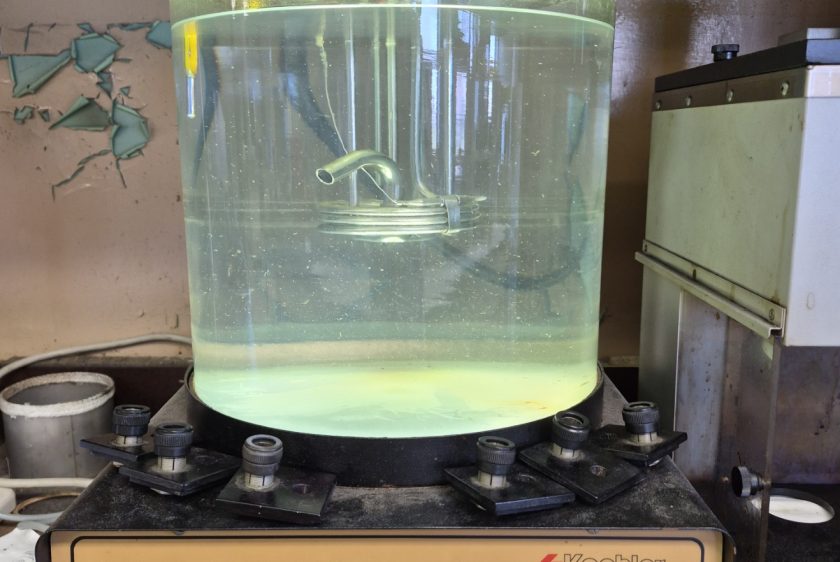
Environmental degradation is rarely caused by a single factor. It is the synergistic interplay of three primary stressors that leads to material failure.
A. Solar Radiation (UV Weathering)
The Ultraviolet (UV) portion of the solar spectrum, while only accounting for about 5% of total sunlight, is responsible for the majority of polymer degradation.
Photodegradation: UV photons have enough energy to break the covalent bonds in a polymer chain. This process, known as “Scission,” leads to a loss of molecular weight.
The Result: Visually, this manifests as “Yellowing” or “Chalking” (the release of white pigment particles). Structurally, it leads to surface embrittlement and micro-cracking.
The Test: We utilize ASTM G154 (QUV) testing, which uses fluorescent UV lamps to simulate the short-wave UV that causes the most damage.
B. Thermal Stress (Heat Aging & Cycling)
Heat acts as a catalyst for almost all chemical degradation reactions.
Thermal Oxidation: High temperatures accelerate the reaction between atmospheric oxygen and the material surface, leading to “Cross-linking” (making the material brittle) or “Chain Scission” (making it soft and tacky).
Thermal Expansion/Contraction: When materials are cycled between extreme heat and cold, they expand and contract at different rates (Coefficient of Thermal Expansion – CTE). This creates internal “Shear Stress” that leads to delamination of coatings and cracking of solder joints in electronics.
The Test: We perform High-Temperature Aging and Thermal Shock testing to evaluate these mechanisms.
C. Moisture (Humidity & Condensation)
As detailed in our Moisture & Chemical Exposure guide, water is a powerful solvent and chemical reactant.
Hydrolysis: Water molecules chemically break down polymers like Polyurethane and Nylon.
Physical Swelling: Moisture absorption causes dimensional changes that can lead to mechanical interference in precision assemblies.
The Test: We utilize Cyclic Humidity chambers to simulate the “Dew Cycle”—the daily transition from daytime heat to nighttime condensation.
2. Critical Failure Modes Identified in the Lab
Sterling Analytical’s exposure protocols are designed to identify specific “Failure Signatures” that correlate to real-world field returns.
Surface Chalking and Gloss Loss
In coatings and plastics, the first sign of UV failure is the loss of “Specular Gloss.” As the polymer binder degrades, it exposes the underlying pigments. These pigments are no longer bound to the surface and can be wiped away as a fine powder (Chalking). This is a critical metric for the automotive and architectural industries.
Environmental Stress Cracking (ESC)
When environmental exposure (UV/Heat) is combined with a chemical stressor (like cleaning agents or pollutants), the material can undergo “Brittle Failure” at stress levels far below its design limit. We monitor for the formation of “Crazes”—microscopic cracks that act as stress concentrators.
Corrosion "Creepback"
For coated metals, we evaluate how well a coating prevents the spread of corrosion from a damaged area. By “Scribing” a sample before exposure to Salt Spray (ASTM B117), we can measure the “Creepback”—the distance the rust has traveled under the coating. This is the ultimate test of a primer’s adhesion and corrosion-inhibiting properties.
Delamination of Composites
In multi-layer materials (like carbon fiber composites or laminated glass), environmental stress often attacks the Interface. Moisture and UV can degrade the resin-to-fiber bond, leading to “Interlaminar Failure” where the layers physically separate.
3. Testing Methodologies: Standardized Protocols
We follow internationally recognized standards to ensure your data is defensible and comparable to industry benchmarks.
QUV Accelerated Weathering (ASTM G154 / ISO 4892)
This is the most widely used weathering test in the world. It utilizes fluorescent UV lamps and a “Condensation System” to simulate outdoor weathering.
UVA-340 Lamps: These provide the best simulation of sunlight in the critical short-wave UV region (from 365nm down to the solar cut-off of 295nm).
UVB-313 Lamps: These are used for “Fast-Track” testing, as they provide an intensified UV environment that is more aggressive than natural sunlight.
Salt Spray / Salt Fog (ASTM B117)
For materials destined for coastal or marine environments, salt spray testing is essential. We utilize a continuous fog of 5% Sodium Chloride ($NaCl$) at 35°C. This test is the industry standard for evaluating the “Corrosion Resistance” of plated metals, paints, and coatings.
Xenon Arc Exposure (ASTM G155)
Unlike the QUV, which focuses on the UV spectrum, Xenon Arc testing simulates the Full Spectrum of sunlight, including Visible Light and Infrared (IR).
Why it matters: Xenon Arc is superior for testing “Colorfastness” and “Light Stability” in textiles, inks, and interior automotive components where IR-induced heat is a factor.
Ozone Exposure (ASTM D1149)
Ozone is a highly reactive gas that specifically attacks the “Double Bonds” in elastomers (rubbers). Even at low concentrations (50-100 pphm), ozone causes deep, perpendicular cracks in tires, seals, and hoses. We perform ozone testing to validate the effectiveness of “Antiozonant” additives.
4. Evaluation Metrics: Quantifying the Damage
- Colorimetry ($\Delta E$): Using a spectrophotometer, we measure the change in color in the $L^*a^b^$ color space. We calculate the “Total Color Change” ($\Delta E$) to determine if the fading is within acceptable limits.
- Gloss Retention: We measure gloss at 20°, 60°, and 85° angles to quantify surface degradation.
- Mechanical Property Retention: We perform tensile, elongation, and impact testing on “Post-Exposure” samples. We often find that a material looks fine visually but has lost 50% of its “Elongation at Break,” meaning it will shatter upon the first mechanical impact.
- Microscopic Analysis: We use high-resolution digital microscopy to document the “Crack Density” and “Pit Depth” of the material surface.
5. Industry-Specific Applications
Automotive: Interior & Exterior
Exterior components (bumpers, grilles) must withstand UV and salt spray. Interior components (dashboards, upholstery) must withstand the “Greenhouse Effect”—extreme heat and UV filtered through glass. We perform “Florida” and “Arizona” simulated cycles to validate these parts.
Renewable Energy: Solar & Wind
Solar modules are expected to last 25 years in the harshest environments on earth. We perform Damp Heat (85°C / 85% RH) and UV Pre-conditioning to ensure that the encapsulants and backsheets do not yellow or delaminate, which would reduce the panel’s efficiency.
Outdoor Infrastructure & Construction
From vinyl siding to bridge coatings, we test the “Weatherability” of construction materials. This ensures that a “30-year roof” or a “Lifetime fence” actually meets its marketing claims.
Aerospace & Defense
Military hardware must operate in every climate, from the Arctic to the Sahara. We perform testing according to MIL-STD-810, which includes “Solar Radiation,” “Salt Fog,” and “Fungus Resistance.”
Submission Guidelines
To ensure the most accurate environmental data, please consider the following when submitting samples:
Control Samples: Always provide an “Unexposed Control” (a sample kept in a dark, climate-controlled environment). This is the baseline we use for all comparisons.
Sample Size: For QUV testing, standard flat panels (3″ x 6″ or 4″ x 12″) are preferred. For 3D parts, please consult with our engineers regarding chamber fitment.
Duration: Clearly specify the target exposure hours (e.g., 500, 1,000, or 2,500 hours).
Interim Inspections: We recommend “Pulling” samples at regular intervals (e.g., every 250 hours) to document the rate of degradation rather than just the final state.
Predict Material Performance Before It Fails
Sterling Analytical provides accelerated environmental exposure testing to simulate years of outdoor wear in weeks. Our lab quantifies UV degradation, thermal stress, moisture damage, corrosion, and delamination—giving engineers actionable insights to design durable, high-performance products.
Take the next step with expert environmental testing:
Frequently Asked Questions
This is the most common question in weathering, and the answer is: It depends. There is no universal "Acceleration Factor" because real-world weather varies by location, orientation, and year. However, for many coatings, 1,000 hours of QUV exposure is roughly equivalent to 1 to 3 years of outdoor exposure in a temperate climate.
No. Salt spray is a quality control test, not a direct correlation to real-world time. Because the salt concentration is constant and the humidity is always 100%, it is much more aggressive than natural coastal air. However, it is the industry standard for comparing the relative performance of different coatings. If Coating A lasts 500 hours and Coating B lasts 1,000 hours, Coating B is significantly more likely to survive longer in a marine environment.
Choose Xenon Arc if your primary concern is color change, fading, or interior aesthetics. Xenon Arc mimics the full solar spectrum, including visible and infrared light. Choose QUV if your primary concern is physical degradation, such as cracking, peeling, or loss of structural integrity. QUV focuses on the aggressive short-wave UV that causes polymers to break down mechanically.
Thermal Cycling involves moving between temperatures at a controlled rate (e.g., 5°C per minute). This simulates daily weather patterns. Thermal Shock involves an almost instantaneous transition (e.g., moving a part from -40°C to +85°C in under 10 seconds). Thermal shock is used to find "Latent Defects" in bonded materials or solder joints that would only fail under extreme physical stress.
Our chambers can accommodate components up to approximately 24" x 24" x 24". For larger assemblies, we often recommend testing "Critical Coupons"—samples made of the same materials and coatings as the final product—to ensure the chemistry of the material is sound before investing in full-scale system testing
Quick Contact
If you have any questions or need help, feel free to contact with our team.
Send Us Email:
Call Us Today: