Landline Phone:
(413) 214-6541
Location:
15 Agawam Ave West Springfield, MA 01089
Mon - Fri:
8.00am - 4.00pm
Biomass Ultimate Analysis (CHNS): The Elemental Blueprint
Related Posts
While a Biomass Moisture Analysis tells you the physical state of your fuel, and Biomass Heating Value Analysis tells you its total energy, the Ultimate Analysis reveals the chemical DNA of the material.
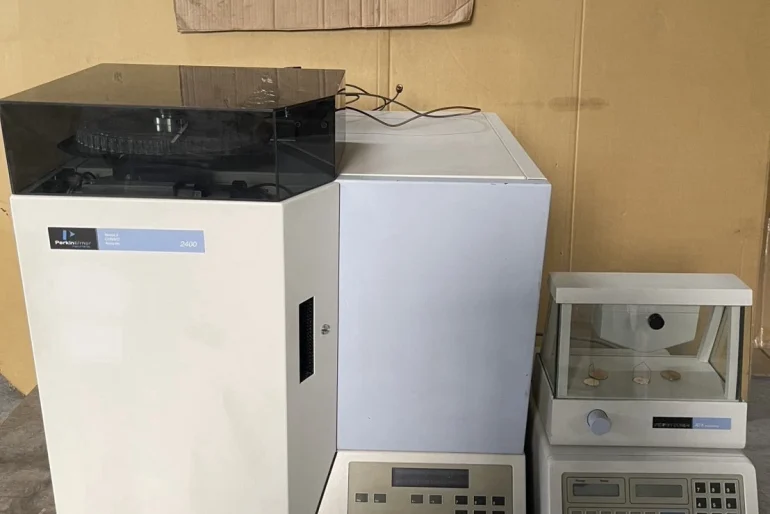
Ultimate Analysis—often referred to as CHNS-O Analysis—is the process of breaking down biomass into its five primary elemental components: Carbon (C), Hydrogen (H), Nitrogen (N), Sulfur (S), and Oxygen (O). At Sterling Analytical, we utilize high-temperature combustion and infrared detection technologies to provide a precise elemental profile that is essential for combustion engineering, emissions modeling, and regulatory compliance.
Whether you are a plant manager calculating your carbon footprint or an engineer designing a flue-gas desulfurization system, the Ultimate Analysis is the foundation of your technical data.
1. The "Big Five": Understanding the Elemental Components
Unlike coal, which is a fossilized mineral, biomass is a young organic material. This biological origin results in a unique elemental signature that requires specialized laboratory handling.
Carbon (C) – The Primary Energy Source
Carbon typically makes up 45% to 55% of the dry weight of biomass. It is the primary source of energy during combustion. When carbon reacts with oxygen, it releases heat and forms $CO_2$. In the context of “Carbon Neutrality,” the carbon measured in our lab is considered “Biogenic Carbon,” which is part of the short-term carbon cycle.
Hydrogen (H) – The Energy Multiplier
Hydrogen is the second most important energy-producing element. While it contributes significantly to the heating value, it also has a “hidden” cost. During combustion, hydrogen reacts with oxygen to form water vapor ($H_2O$). As discussed in our Biomass Heating Value Analysis, this water vapor carries away latent heat, which is why the hydrogen percentage is the most critical variable in calculating the Lower Heating Value (LHV).
Nitrogen (N) – The NOx Precursor
Most biomass contains relatively low nitrogen (usually <1% for wood, but up to 3-4% for some agricultural residues). However, this nitrogen is “fuel-bound.” During combustion, it converts into Nitrogen Oxides ($NOx$), a regulated pollutant. Our analysis allows you to predict your $NOx$ emissions and determine if your Selective Non-Catalytic Reduction (SNCR) system is sized correctly.
Sulfur (S) – The Corrosion and Emission Driver
Biomass is generally praised for its low sulfur content compared to coal. However, even trace amounts of sulfur can lead to the formation of Sulfur Dioxide ($SO_2$) and sulfuric acid. When sulfur interacts with the minerals found in our Biomass Ash Chemistry Analysis, it can form sticky alkali sulfates that lead to severe boiler fouling.
Oxygen (O) – The Biomass Signature
Biomass is highly oxygenated, often containing 30% to 45% oxygen by weight. This is a key differentiator from coal. Because oxygen is already “built-in” to the fuel molecules, biomass requires less “Primary Air” for combustion than fossil fuels. We determine oxygen “by difference” after subtracting the C, H, N, S, and Ash content from the total.
2. Laboratory Methodology: ASTM D5373 and Beyond
At Sterling Analytical, we utilize the Instrumental Combustion Method (ASTM D5373) for the simultaneous determination of Carbon, Hydrogen, and Nitrogen.
The Combustion Process
A micro-sample of the biomass (ground to <0.2mm) is flash-combusted at temperatures exceeding $1,000^\circ C$ in a pure oxygen environment. This “Total Combustion” converts the elements into their gaseous forms:
- Carbon becomes $CO_2$
- Hydrogen becomes $H_2O$
- Nitrogen becomes $N_2$ or $NOx$
- Sulfur becomes $SO_2$
Detection and Quantification
These gases are passed through a series of high-precision infrared (IR) cells and thermal conductivity detectors. Unlike older “wet chemistry” methods, our instrumental analysis provides results in minutes with a precision level of 0.01%. This accuracy is vital for clients who must report their carbon intensity to carbon credit markets or environmental agencies.
3. Why Ultimate Analysis is Critical for LHV
You cannot accurately know the usable energy of your fuel without a CHNS test. The formula for Lower Heating Value (LHV)—the energy actually available to your boiler—requires the exact hydrogen percentage:
$$LHV = HHV – (218.3 \times H%)$$
If you estimate your hydrogen content based on “literature values” (which often assume a flat 6%), you could be miscalculating your boiler efficiency by as much as 2-3%. For a large-scale power plant, that 2% error represents hundreds of thousands of dollars in “lost” energy or “unaccounted” fuel costs.
By pairing our Biomass Heating Value Analysis with an Ultimate Analysis, Sterling Analytical provides the most accurate energy balance possible.
4. Chlorine (Cl): The "Sixth Element" of Ultimate Analysis
While not strictly part of the “CHNS” acronym, Chlorine is a critical component of a professional Ultimate Analysis suite. At Sterling Analytical, we typically perform Chlorine analysis via Oxygen Bomb Combustion followed by Ion Chromatography (IC) or Potentiometric Titration.
Why Chlorine Matters:
High-Temperature Corrosion: Chlorine is the primary driver of “superheater corrosion.” It reacts with the metals in boiler tubes to form volatile metal chlorides, which strip away the protective oxide layer of the steel.
The “Sticky” Factor: As discussed in our Biomass Ash Chemistry Analysis, chlorine acts as a transport agent for potassium. It creates low-melting-point salts that cause fly ash to stick to tubes, leading to rapid fouling.
Dioxin/Furan Formation: In some jurisdictions, chlorine content is strictly regulated because it can lead to the formation of chlorinated organic compounds (dioxins) if the combustion temperature is not properly maintained.
5. Combustion Engineering: Theoretical Air and Stoichiometry
For boiler designers and operators, the Ultimate Analysis is the source of the “Stoichiometric” data required to tune the combustion process. Using the Carbon, Hydrogen, and Oxygen percentages, our engineers can calculate the Theoretical Air required for complete combustion.
Air-to-Fuel Ratio
If you provide too little air (Oxygen), you generate Carbon Monoxide (CO) and unburned carbon in the ash. If you provide too much air, you “quench” the fire and waste energy heating up nitrogen that just goes out the stack.
Carbon (C) requires 2.67 lbs of Oxygen per lb of Carbon.
Hydrogen (H) requires 8 lbs of Oxygen per lb of Hydrogen.
Oxygen (O) already in the fuel reduces the amount of external air you need to blow into the furnace.
By knowing the exact elemental makeup, you can set your “Excess Air” levels to the absolute minimum required for clean combustion, significantly increasing your overall plant efficiency.
6. Environmental Compliance and Carbon Credits
In the modern regulatory landscape, “guessing” your emissions is no longer an option. Ultimate Analysis provides the defensible data needed for state and federal permits.
NOx and SOx Modeling
By quantifying the Fuel-Bound Nitrogen and Sulfur, we provide the “Worst Case Scenario” for emissions. This data is used to prove compliance with Title V permits and to determine the injection rates for urea or lime in emission control systems.
Biogenic Carbon and Carbon Credits
As the world moves toward “Net Zero,” the ability to prove the biogenic origin of your carbon is worth money. Carbon credits are often calculated based on the total Carbon (C) content of the biomass. Sterling Analytical’s reports provide the “Carbon Intensity” data required for participation in Renewable Energy Certificate (REC) programs and carbon offset markets.
7. Sampling and Preparation for Micro-Analysis
Ultimate Analysis is a “Micro-Method.” We are often analyzing a sample as small as 2 to 5 milligrams. Because the sample size is so tiny, the preparation of that sample is the most critical part of the process.
Ultra-Fine Grinding: To ensure that 5 milligrams represents a 50-ton truckload of wood chips, the biomass must be ground to a “flour” consistency (usually <200 microns). This ensures that the ratio of bark, heartwood, and pith is perfectly homogenized.
Drying Protocols: Elemental analysis is almost always reported on a “Dry Basis.” Therefore, the sample must be perfectly dried according to Biomass Moisture Analysis standards before it enters the CHNS furnace.
Avoiding Contamination: Even the oils from a technician’s hand can add enough Carbon and Hydrogen to a micro-sample to skew the results. Our lab utilizes specialized handling tools and silver/tin capsules to maintain sample purity.
8. Industry-Specific Elemental Profiles
Wood Pellets: Typically very high in Carbon (~50%) and very low in Nitrogen and Sulfur (<0.1%), making them the “cleanest” biomass fuel.
Agricultural Straw: Often higher in Nitrogen (up to 1.5%) and Chlorine, requiring more robust emission controls and ash management.
Waste-Derived Fuels (RDF): These have highly variable Ultimate Analyses. High plastic content will spike the Carbon and Hydrogen, while food waste will spike the Nitrogen and Moisture.
Energy Crops (Switchgrass/Miscanthus): These often show a “seasonal” shift in Ultimate Analysis. Harvesting later in the year allows the plant to “reabsorb” nitrogen into the roots, resulting in a cleaner-burning fuel.
Biomass Heating Value Analysis: The Science of Energy Density
Sterling Analytical delivers advanced Biomass Heating Value Analysis to precisely quantify the true energy density of your fuel. Our testing evaluates calorific value, fuel consistency, and combustion performance across a wide range of biomass materials, including wood waste, agricultural residues, pellets, and other bioenergy feedstocks.
Our precise, data-driven insights empower engineers, producers, and energy developers to optimize fuel quality, improve system performance, and make confident decisions for power generation, heating applications, and sustainable energy projects.
Take the Next Step with Expert Biomass Testing:
Frequently Asked Questions
Proximate analysis (Moisture, Volatiles, Fixed Carbon, Ash) describes the "physical" behavior of the fuel. Ultimate Analysis (CHNS-O) describes the "chemical" makeup. You need Proximate for boiler operation and Ultimate for chemistry and emissions.
Oxygen is not measured directly in standard biomass testing. It is calculated by: $100 - (C + H + N + S + Ash)$. This is why an accurate Ash and CHNS test are required to get a correct Oxygen value.
If the sample was not properly dried, the "Hydrogen" result will include the hydrogen from the water ($H_2O$) in the sample. Sterling Analytical performs a strict drying step to ensure we are only measuring "Fuel-Bound Hydrogen."
Indirectly. While it doesn't measure the minerals, the Sulfur and Chlorine data from the Ultimate Analysis are key inputs for predicting how the minerals from the Biomass Ash Chemistry Analysis will react and stick to boiler tubes.
Quick Contact
If you have any questions or need help, feel free to contact with our team.
Send Us Email:
Call Us Today: