Landline Phone:
(413) 214-6541
Location:
15 Agawam Ave West Springfield, MA 01089
Mon - Fri:
8.00am - 4.00pm
Sludge Nutrient & Chemical Analysis Services
Related Posts
Sterling Analytical provides specialized sludge and biosolids nutrient analysis, transforming waste stream data into actionable environmental intelligence. As municipal wastewater treatment plants (WWTPs) and industrial facilities move toward “resource recovery” models, the chemical characterization of sludge has become a critical operational requirement. Whether you are managing a land application program, producing commercial-grade fertilizer, or optimizing anaerobic digestion, our laboratory provides the high-resolution nutrient profiles required for regulatory compliance and agronomic success.
Using EPA-approved methodologies and Standard Methods (SM), we quantify the primary macronutrients (Nitrogen, Phosphorus, and Potassium), secondary micronutrients, and organic matter content. Our data allows facility managers to meet the stringent requirements of EPA 40 CFR Part 503, ensuring that biosolids are safe for beneficial reuse while maximizing their value as a soil amendment.
If you are searching for a biosolids testing laboratory near me to calculate agronomic application rates or to troubleshoot a biological process upset, Sterling Analytical offers the technical depth and rapid turnaround times necessary for modern residuals management.
The Importance of Nutrient Profiling in Biosolids
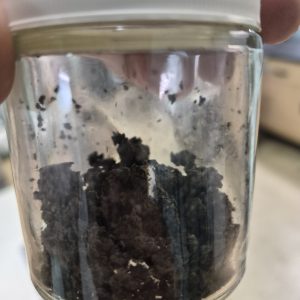
Sludge is no longer viewed merely as a byproduct to be landfilled; it is a complex biological matrix rich in essential elements. However, the concentration of these elements varies wildly based on the influent source, the treatment process (aerobic vs. anaerobic), and the dewatering technology used.
1. Regulatory Compliance (EPA Part 503)
To apply biosolids to land, operators must demonstrate that the nutrient loading does not exceed the “Agronomic Rate”—the amount of nitrogen required by a specific crop that prevents excess nitrate from leaching into groundwater. Sterling Analytical provides the certified data used to build these nutrient management plans (NMPs).
2. Commercial Fertilizer Value
For facilities producing Class A “Exceptional Quality” (EQ) biosolids, the N-P-K (Nitrogen-Phosphorus-Potassium) ratio is the primary selling point. Our lab provides the “Guaranteed Analysis” data required for fertilizer labeling and commercial distribution.
3. Process Optimization
Monitoring the nutrient balance within a digester is essential for microbial health. A lack of nitrogen or phosphorus can “starve” the biomass, leading to poor solids reduction and increased polymer costs. Our testing helps operators maintain the ideal C:N
ratio for maximum efficiency.
Our Core Nutrient Analytical Capabilities
Sterling Analytical utilizes a combination of wet chemistry, combustion analysis, and spectroscopy to provide a complete chemical fingerprint of sludge samples.
1. Nitrogen Fractionation (The Nitrogen Profile)
Nitrogen in sludge exists in multiple forms, each with different environmental behaviors. We provide a full breakdown:
Total Kjeldahl Nitrogen (TKN): The sum of organic nitrogen and ammonia. This is the primary metric for total nitrogen content.
Ammonia-Nitrogen (NH3-N): The readily available form of nitrogen. High ammonia levels can be toxic to plants if applied too aggressively but are a key indicator of digestion efficiency.
Nitrate & Nitrite (NO3/NO2): Usually present in lower concentrations in sludge, but critical for calculating “Plant Available Nitrogen” (PAN).
Organic Nitrogen: Calculated by subtracting ammonia from TKN, representing the “slow-release” portion of the nitrogen pool.
2. Phosphorus Analysis (Total and Available)
Phosphorus is essential for plant energy transfer but is a major driver of “eutrophication” (algal blooms) in surface waters.
Total Phosphorus: Measured via acid digestion followed by colorimetric analysis.
Water-Soluble Phosphorus: A key metric for assessing the risk of phosphorus runoff from land-applied biosolids.
Citrate-Soluble Phosphorus: Measures the phosphorus that becomes available to plants over a growing season.
3. Potassium and Micronutrients
Soluble Potassium (K): Essential for plant water regulation and disease resistance.
Secondary Nutrients: Analysis for Calcium (Ca), Magnesium (Mg), and Sulfur (S), which improve soil structure and chemistry.
Trace Micronutrients: Precision testing for Boron (B), Copper (Cu), Iron (Fe), Manganese (Mn), and Zinc (Zn).
4. Organic Matter and Carbon Content
Total Organic Carbon (TOC): A direct measure of the carbon load in the sludge.
Volatile Solids (VS): The portion of the sludge that can be oxidized, used to calculate “Volatile Solids Reduction” (VSR)—a key EPA requirement for vector attraction reduction.
C Ratio: The relationship between Carbon and Nitrogen, which determines how quickly the sludge will decompose in the soil.
Calculating Plant Available Nitrogen (PAN)
One of the most frequent requests for our lab is the data required to calculate Plant Available Nitrogen (PAN). Unlike synthetic fertilizers, the nitrogen in biosolids is not 100% available in the first year.
The PAN Formula:
The calculation typically follows this logic:
The calculation typically follows this logic:
PAN = (Ammonia-N * Volatilization Factor) + (Nitrate-N) + (Organic-N * Mineralization Rate)
Volatilization: If sludge is applied to the surface without incorporation, much of the ammonia is lost to the air.
Mineralization: Organic nitrogen must be broken down by soil microbes into inorganic forms. This rate varies based on whether the sludge was composted, anaerobically digested, or lime-stabilized.
Sterling Analytical provides the high-precision TKN, Ammonia, and Nitrate data that allow agronomists to apply these factors accurately, preventing environmental non-compliance and ensuring crop productivity.
Engineering Impact: Sludge Chemistry and Dewatering
The chemical makeup of sludge directly impacts the cost of disposal.
Charge Density: The ratio of nutrients and organic polymers affects the “surface charge” of sludge particles. Our chemical analysis helps engineers select the correct cationic or anionic polymers for dewatering.
Struvite Potential: High levels of Magnesium, Ammonia, and Phosphorus can lead to the formation of Struvite (MAP)—a concrete-like mineral that clogs pipes and heat exchangers in anaerobic digestion systems. Our testing identifies high-risk concentrations before they cause mechanical failure.
Compliance and Regulatory Support
Our testing protocols are designed to meet:
EPA 40 CFR Part 503: The federal standard for the use or disposal of sewage sludge.
State-Specific Nutrient Management Plans (NMP): Meeting the unique requirements of state environmental agencies (e.g., PADEP, NJDEP, NYSDEC).
USDA/AAPFCO Standards: For the registration of biosolids-based fertilizers.
Problems Identified
Through nutrient and chemical analysis, we frequently identify:
Nitrogen Imbalance: Low TKN levels in digesters leading to “filamentous bulking” and poor settling.
Phosphorus Overloading: High phosphorus-to-nitrogen ratios that limit the amount of sludge that can be applied to a specific acreage.
Mineralization Failures: Low organic matter decomposition in composting operations.
Struvite Risk: Elevated Magnesium and Phosphorus levels in centrate lines.
Who Needs This Testing?
Municipal WWTP Operators: Managing biosolids programs and EPA reporting.
Contract Haulers & Land Appliers: Ensuring the material they spread meets permit limits.
Composting Facilities: Monitoring the maturity and nutrient value of finished compost.
Industrial Food Processors: Characterizing high-strength organic waste for land application or anaerobic digestion.
Agronomists & Soil Scientists: Developing precision fertilization plans using biosolids.
How to Submit a Sample
Sample Volume: Provide at least 500g to 1kg of dewatered cake or 2 Liters of liquid sludge.
Container: Use wide-mouth HDPE jars. Ensure the lids are tight to prevent ammonia loss.
Preservation: Keep samples at 4°C during transport. For liquid samples being tested for nitrogen fractions, prompt delivery is essential to prevent biological conversion of ammonia to nitrate.
Representativeness: Sludge is notoriously non-homogenous. We recommend taking multiple “grabs” and compositing them into a single container for a more accurate average.
Unlock Precise Nutrient Insights for Your Sludge & Biosolids
Transform complex sludge chemistry into actionable data. Sterling Analytical provides accurate nutrient profiles, regulatory compliance support, and agronomic calculations—helping you optimize land application, digestion processes, and fertilizer production.
Take the next step with our expert laboratory services:
Frequently Asked Questions
Class A biosolids have undergone advanced treatment (like heat or composting) to reduce pathogens to undetectable levels, allowing for unrestricted use. Class B biosolids have reduced pathogens but still have restrictions on where and how they can be applied. Both require nutrient testing.
TKN includes both Ammonia AND Organic Nitrogen. Organic nitrogen is "locked up" in proteins and biological cells and will be released slowly over time.
EPA Part 503 frequency is based on the volume of sludge produced (e.g., annually, quarterly, or monthly). However, for process control, many facilities test monthly to track digester health.
Yes. We typically perform nutrient and metal analysis (ICP-OES) from the same homogenized sample to ensure the data is correlated.
Quick Contact
If you have any questions or need help, feel free to contact with our team.
Send Us Email:
Call Us Today: